
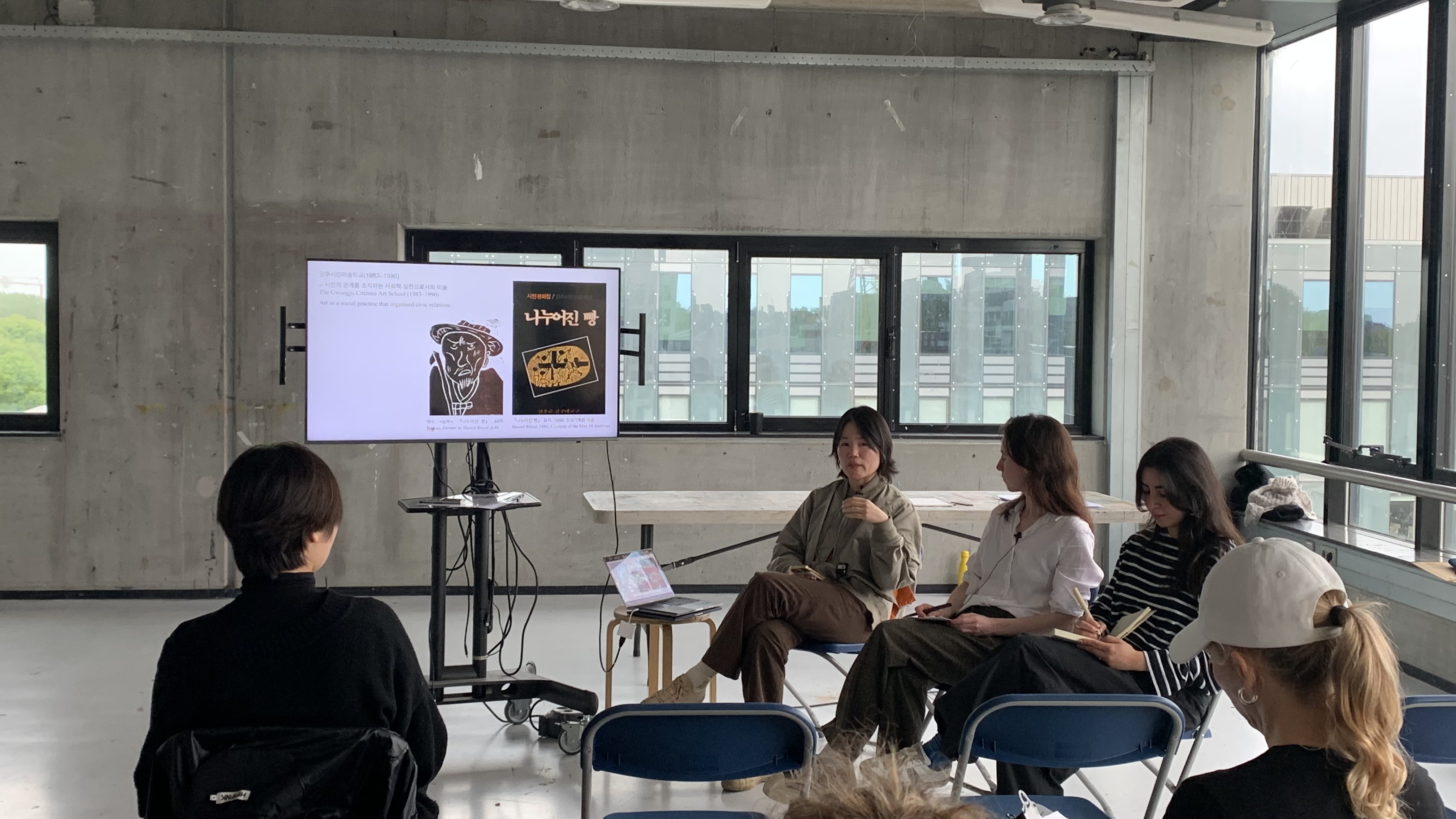
On 13 May, we gathered for Conditions for Different Temporalities, a morning of dialogue with Seoul-based curator Gahee Park. In the first instalment of this new collaboration between Slow AI and ARIAS, initiated by postdoctoral researcher Janine Armin, Gahee led a conversation around care, knowledge, AI as infrastructure, and curatorial practices.
Drawing on the final line of Rainer Maria Rilke's poem Archaic Torso of Apollo, which reads “You must change your life”, Gahee opened a discussion about the need to radically transform contemporary curatorial practices and thought. Focusing on the etymology of the word 'curator' – which comes from the latin ‘cura’, meaning 'care' – Gahee talked about placing care at the heart of the processes through which knowledge is produced and presented to different audiences. For her, exhibitions are ‘events of knowledge’ and, in that sense, the role of the curator is to nurture, protect, and care for how information and ideas are produced and circulated.
The increased use of AI in curatorial practices has transformed the care ecosystem. Because AI is fundamentally associated with development, modernity and efficiency, the time, reflection and slowness that are usually required in curatorial practices are now under threat. Ultimately, this has altered the ways in which art is organised, perceived, and understood. But Gahee suggests that the rise of AI in curatorial practices also provides an opportunity to examine the conditions under which artworks are produced and shared. At the 16th Gwangju Biennale in 2026, where she is a member of the curatorial team, AI has been incorporated as an additional layer of mediation. For instance, the main image of the Biennale is a graphic created by designer E Roon Kang that features AI-generated poetry over an image of a Jeju volcanic rock from Jeju Stone Park.
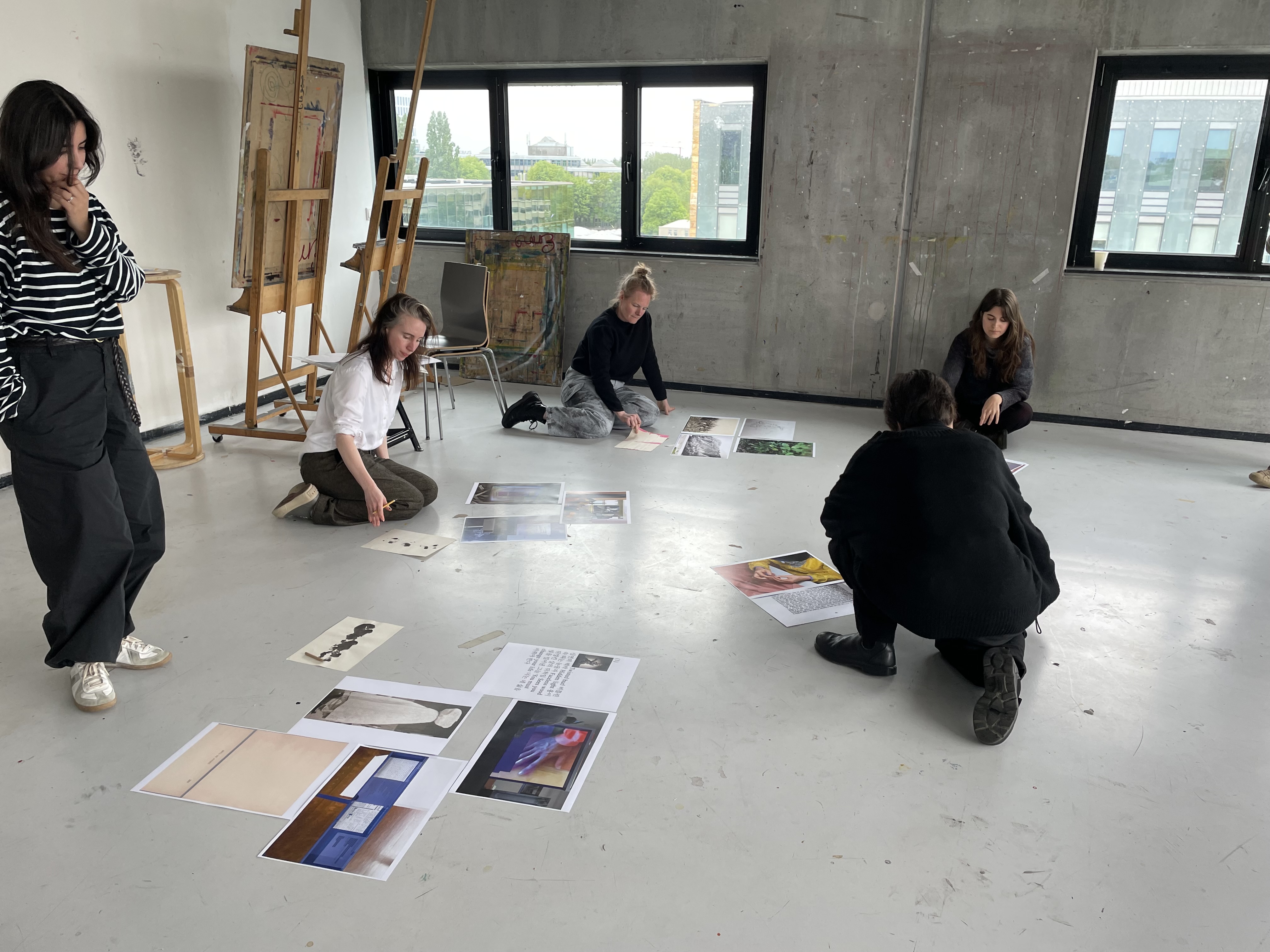
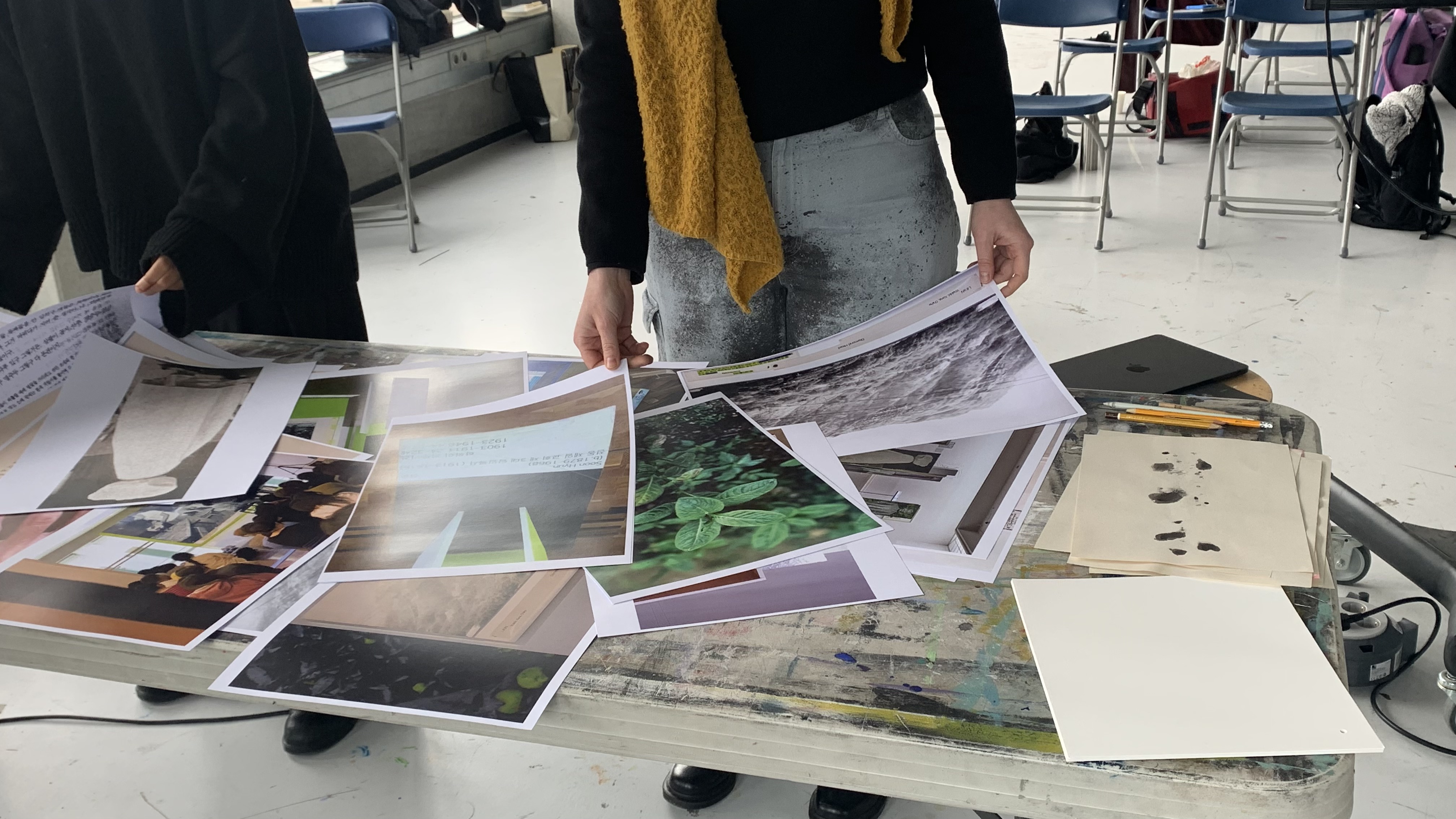
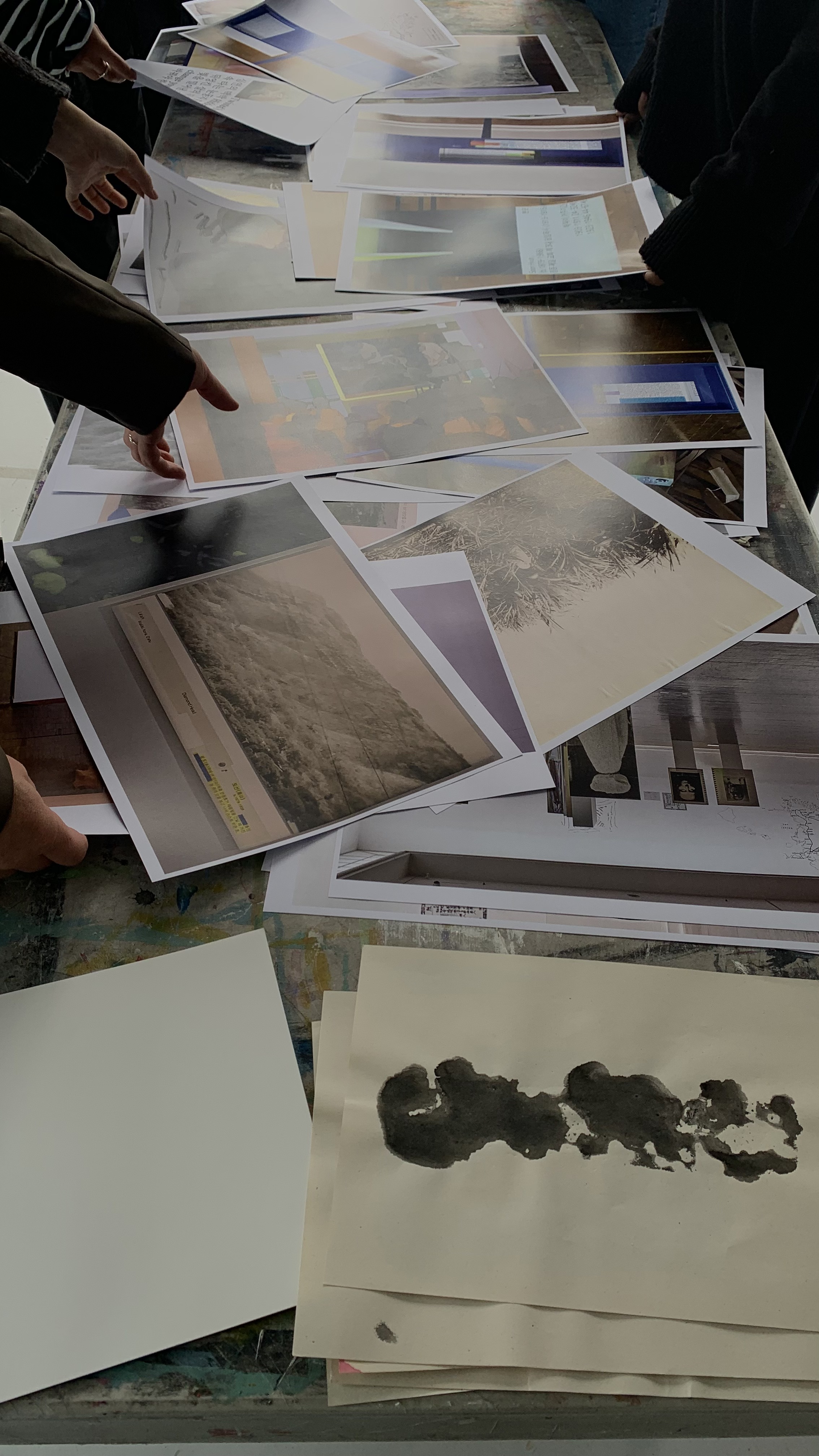
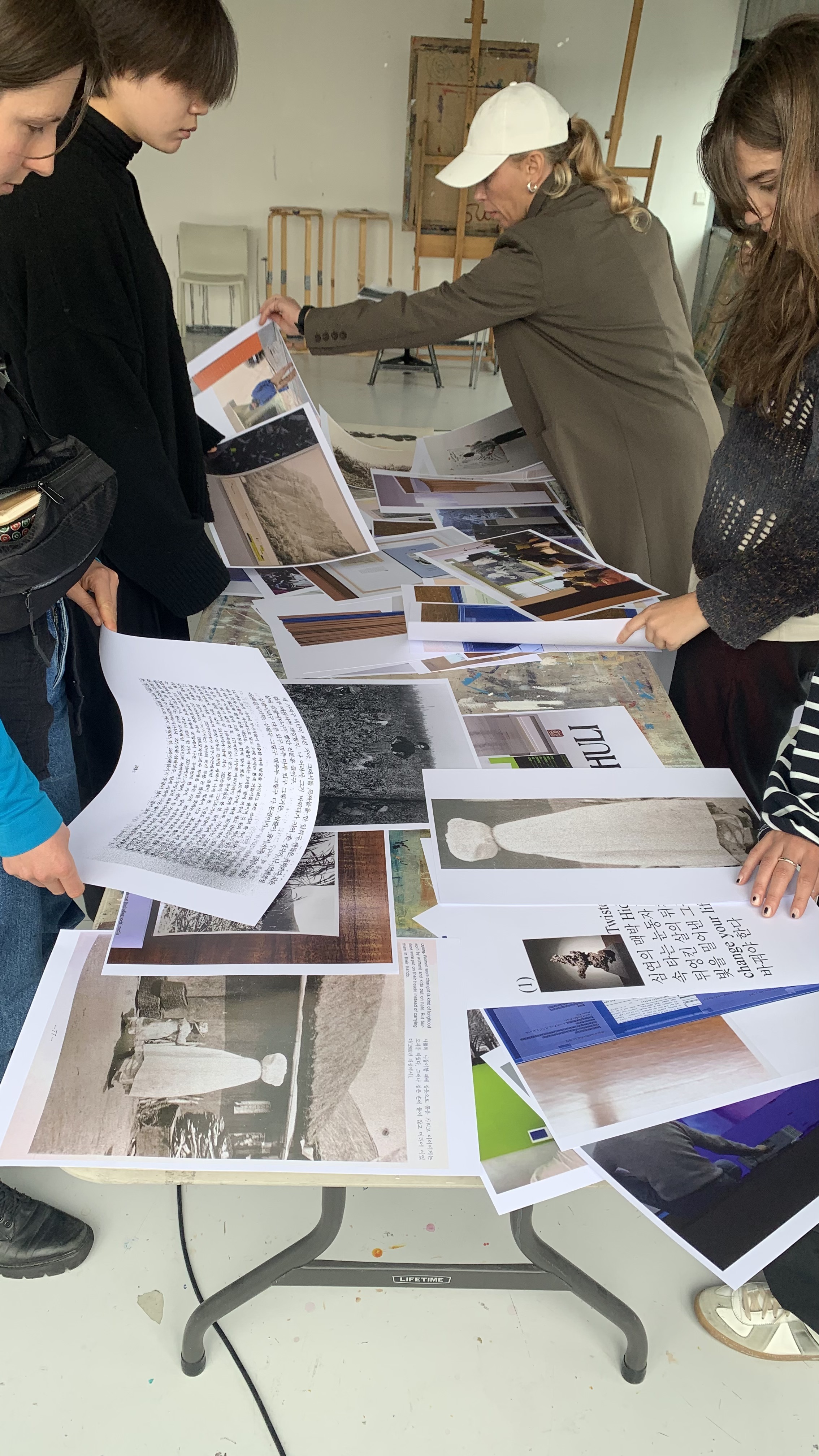
Following on from the discussion, Janine and Gahee then led a small curatorial workshop in which each participant selected four images from a set of pre-selected ones and arranged their own collection, either considering a common theme or an intended audience. In the end, each participant had curated their own miniature exhibition, addressing topics such as extraction and the mysterious, and left wondering about how AI would interpret and mediate their collections.
Images by Valeria Tafurt & Mara Vasile
Biographies
Gahee Park (she/her) is a curator based in Seoul. She is a curator for the upcoming 2026 edition of the Gwangju Biennale. She worked at the Seoul Museum of Art from 2013 to 2017 and from 2020 to 2025, and was guest curator in the 2018 Busan Biennale Divided We Stand. Approaching curating as a way of learning, her curatorial practices seek to provoke ‘events of knowledge’. Recent projects include The Part In the Story Where Our Accumulated Dust Becomes a Mountain (2023–2024), and Ua a‘o ‘ia ‘o ia e ia 우아 아오 이아 에 이아 오 이아 (2024–25), a solo exhibition by Sung Hwan Kim. Her practice centres on caring for the processes through which knowledge is formed, circulated, and transformed across temporal and geographical boundaries.
Janine Armin (she/her) is a writer, editor, and organiser whose research explores artistic practices rooted in nonlinear anticolonial methodologies. She is a post-doc researcher in the Visual Methodologies Collective at AUAS, and defended her PhD at the University of Amsterdam in May 2026. Janine received her MA from the Center for Curatorial Studies, Bard College. She has held leadership roles in publication departments for art institutions, and is currently head of publications for Sonsbeek 2026. Recent curatorial projects include Coming Home Late: Jo Baer in the Land of the Giants at Highlanes, Drogheda and the Irish Museum of Modern Art, Dublin (2023–24). She is author of Sung Hwan Kim: A Record of Drifting Across the Sea (Afterall One Work, 2025) and recent co-edited books include Unlearning Routines of the Possible (with Annette Krauss, Minor Compositions, 2025). Her writing appears in various publications, most recently as a chapbook for Proxy Columns (Hartwig Art Foundation, 2026).