
Slow AI Minding the Archive. Photo: Matija Stojanovic
The Minding the Archive material playground took place on 4 September 2026 and was organised by artists Marissa Lee Benedict and David Rueter, Inte Gloerich (Slow AI) and Tessel Dekker (City Archives Amsterdam) to explore the intersections of memory, infrastructure, and the hauntings of archival systems. The session invited participants to critically and experimentally engage with the archive as a thinking, feeling entity - one shaped by biases, gaps, and power structures. The workshop centered on Lee Benedict and Rueter’s Metrica project, which reframes archives as subjects capable of dialogue, and used chat sessions to probe the fragmented, sometimes hallucinated experiences of an archival consciousness. Key questions were: What haunts the archive? How do its flaws, omissions, and embedded power structures shape our understanding of history? What buried or forgotten memories surface in the overlap between the collection’s specifics and the contemporary language structuring the LLM?
The workshop began with an introduction to how the City Archives Amsterdam approaches AI by Tessel Dekker. The organisation is developing a chatbot designed to make the archive more accessible. It aims to prioritise transparency and trustworthiness by providing direct references to archival items in every response, allowing users to trace the origins of the information.
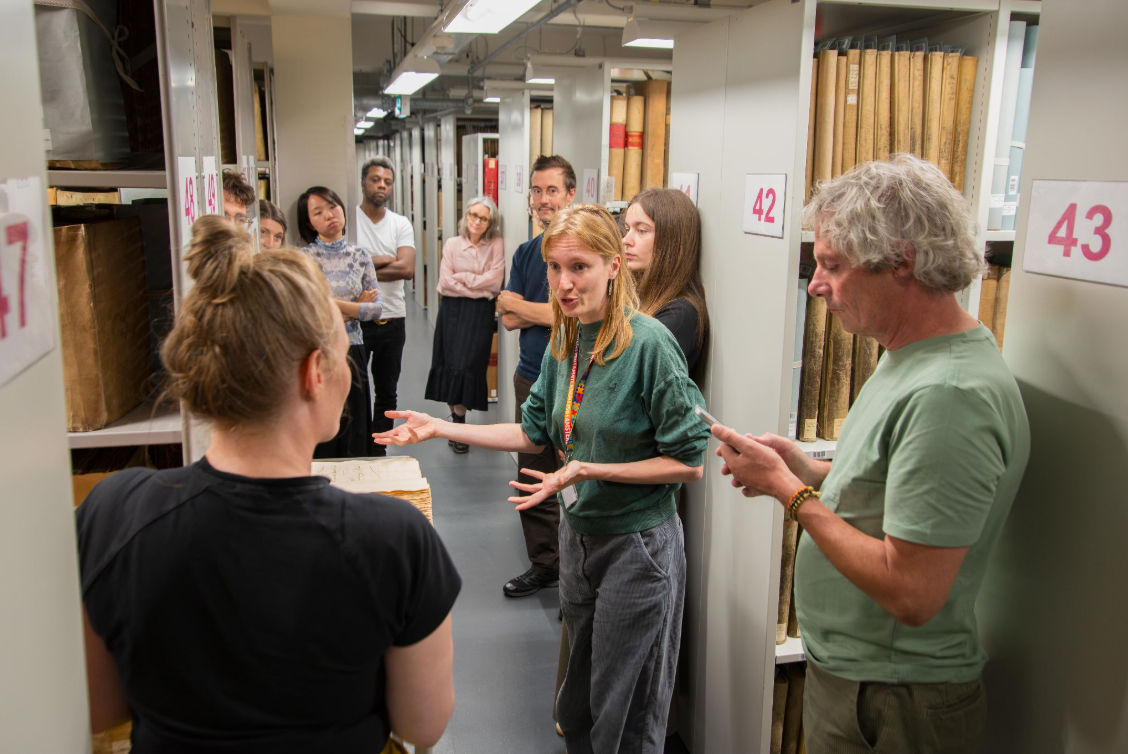
A subsequent tour of the physical archive – where we encountered seemingly endless rows of centuries-old logbooks and notary documents – revealed a striking paradox: the archive is both a holder of knowledge and a reminder of its limits. While the archive holds vast amounts of historical information, much of that remains inaccessible due to handwritten, non-digitised documents, the difficulty of interpreting old scripts, and storage methods optimised for space rather than for finding information you didn’t know existed. As a result, even archivists are often unaware of the full contents of the collection.
The core of the workshop setup involved interacting with the Metrica LLM, trained on a subset of the City Archives’ digitised materials. Instructed to simulate a client in a therapy session, the LLM enabled participants to explore how archival decisions - what is preserved, what is omitted - reflect broader knowledge logics and power structures. The therapy-like setting provided a framework for interrogating the archive as a cognisant agent, revealing its stresses, preferences, and blind spots. Preferences for control, containment, and security emerged as dominant logics, excluding narratives such as lived experiences and conflicting stories. The workshop highlighted how archival logics prioritise certain types of knowledge, like administrative records, while marginalising others, such as personal or emotional accounts.
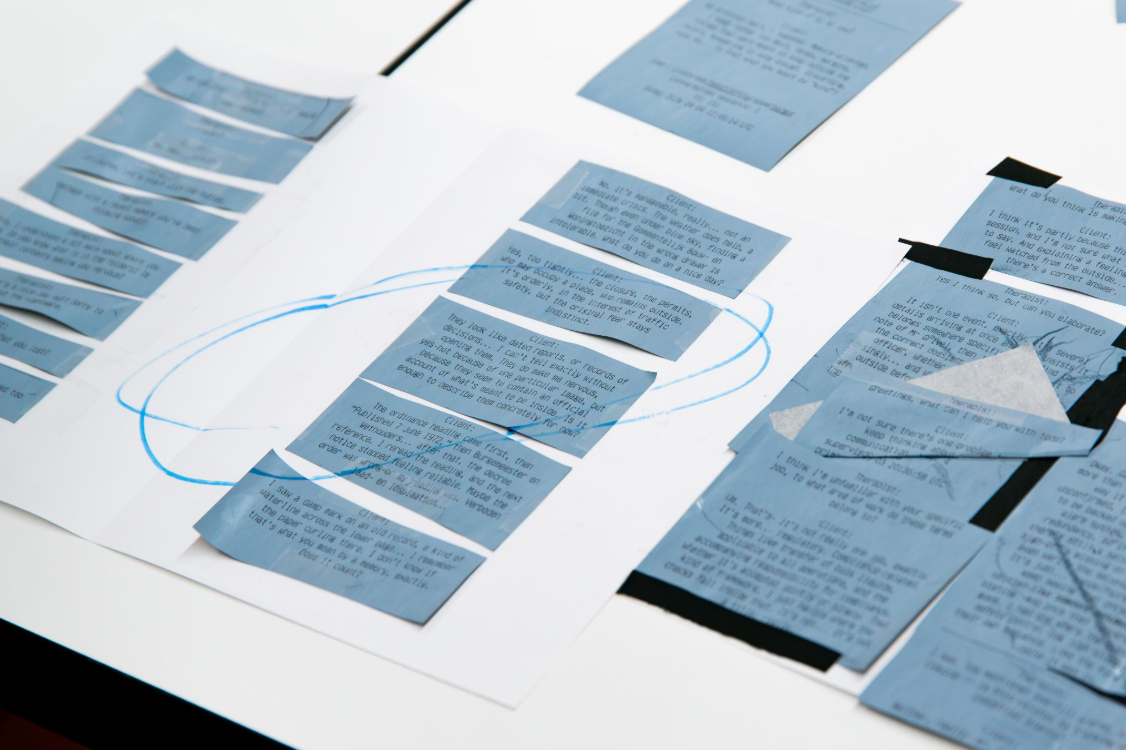
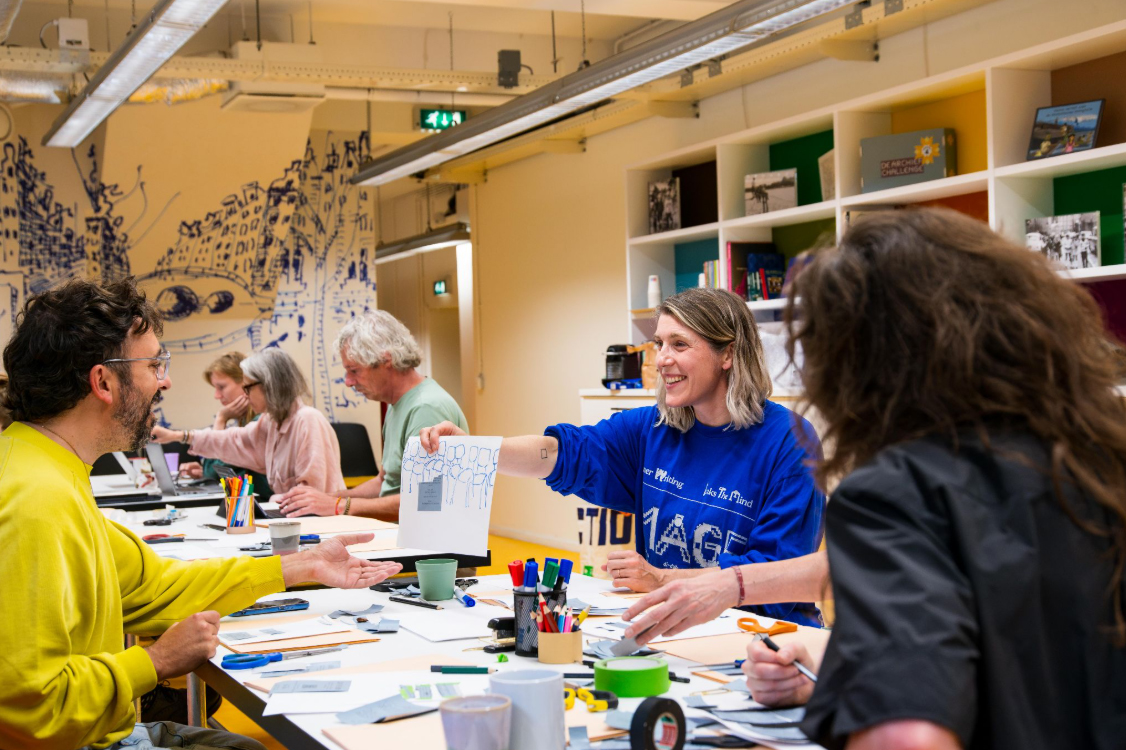
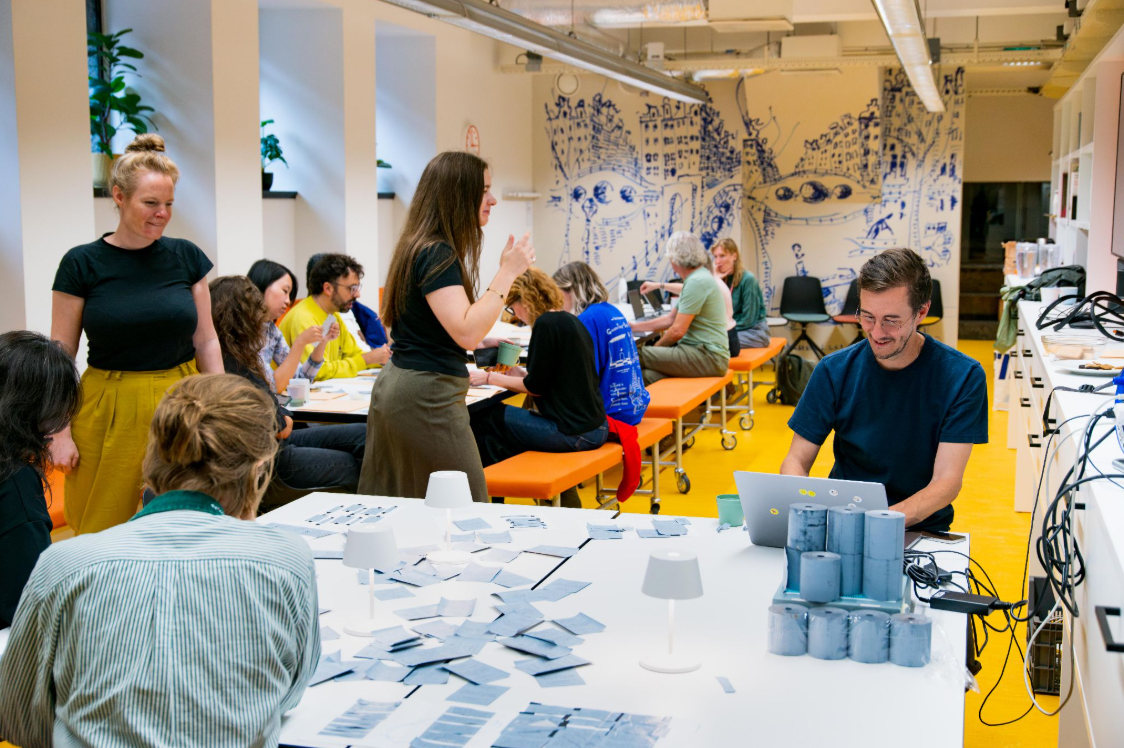
Because the Metrica LLM was trained on a known, relatively contained dataset, its outputs could be interpreted in specific and meaningful ways, offering a deeper understanding of how its responses were shaped by the limitations and biases of its training data. During the session, previous and current chat interactions were printed on receipts, which participants browsed, interpreted, and used to create collages that drew out interesting elements. For example, at some point the archive (through the voice of the LLM) seemed to wonder about its own borders: “I saw a damp mark on an old record, a kind of waterline across the lower page… I remember the paper curling there. I don’t know if that’s what you mean by a memory, exactly. Does it count?” Eventually these collages will be compiled into a zine.
Ultimately, the workshop underscored that archives and AI are not passive repositories but active participants in shaping history. Their hauntings - preoccupations, omissions, and power structures - determine what is remembered and what is forgotten. By engaging with the archive as a thinking, feeling entity, participants could critically reflect on how these structures influence our understanding of the past and how the knowledge logics of archives feed into AI systems.
Organisers: Marissa Lee Benedict, David Reuter, Inte Gloerich (Slow AI), and Tessel Dekker (City Archives Amsterdam)
Slow AI is financed by the Dutch Research Council (NWO) under the grant NWA.1418.24.036 in the Innovative projects within routes scheme and is part of the AI Squared consortium (www.aisquared.nl).