
The Ugly Sides of Care Reading Group is a series part of the Care Ecologies research collective, which aims to address the (mis)conceptions and blind spots of care in facilitating interdisciplinary collaborations within research and the arts. For the first session, artist Pernilla Philip guided us through a workshop that combined collective reading with hands-on material experimentation, inquiring into care frictions, material care, and facilitation within collaborative practices.
The event started off with a presentation of Pernilla’s work as an artist, which foregrounds the lived experience of living with a chronic illness and the gap between healthcare providers and the needs of people who are dependent on medical services. Participants were invited to reflect and discuss institutional blind spots and the advantages of the alternative of producing medical aid and tools through do-it-yourself methods.
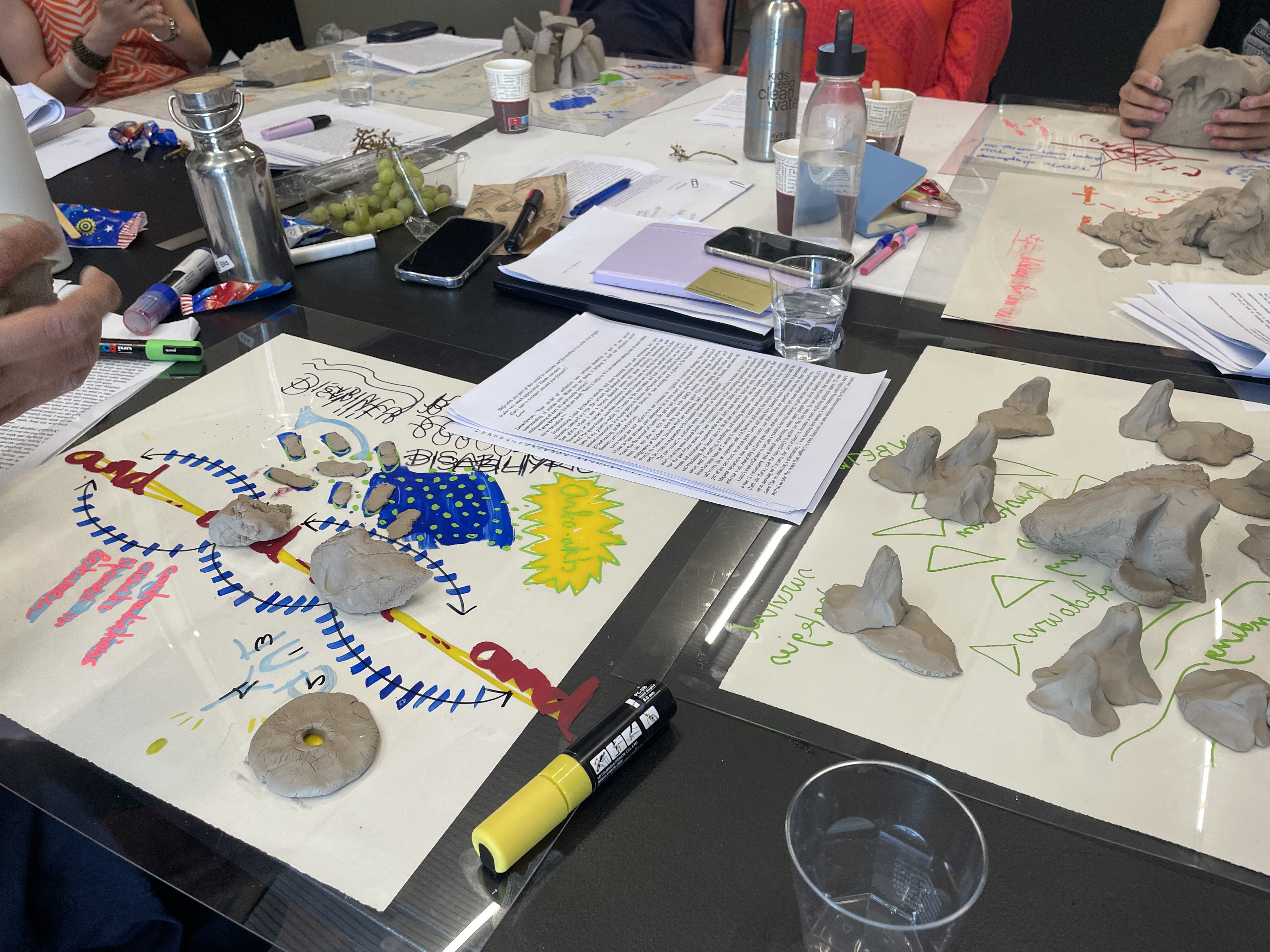
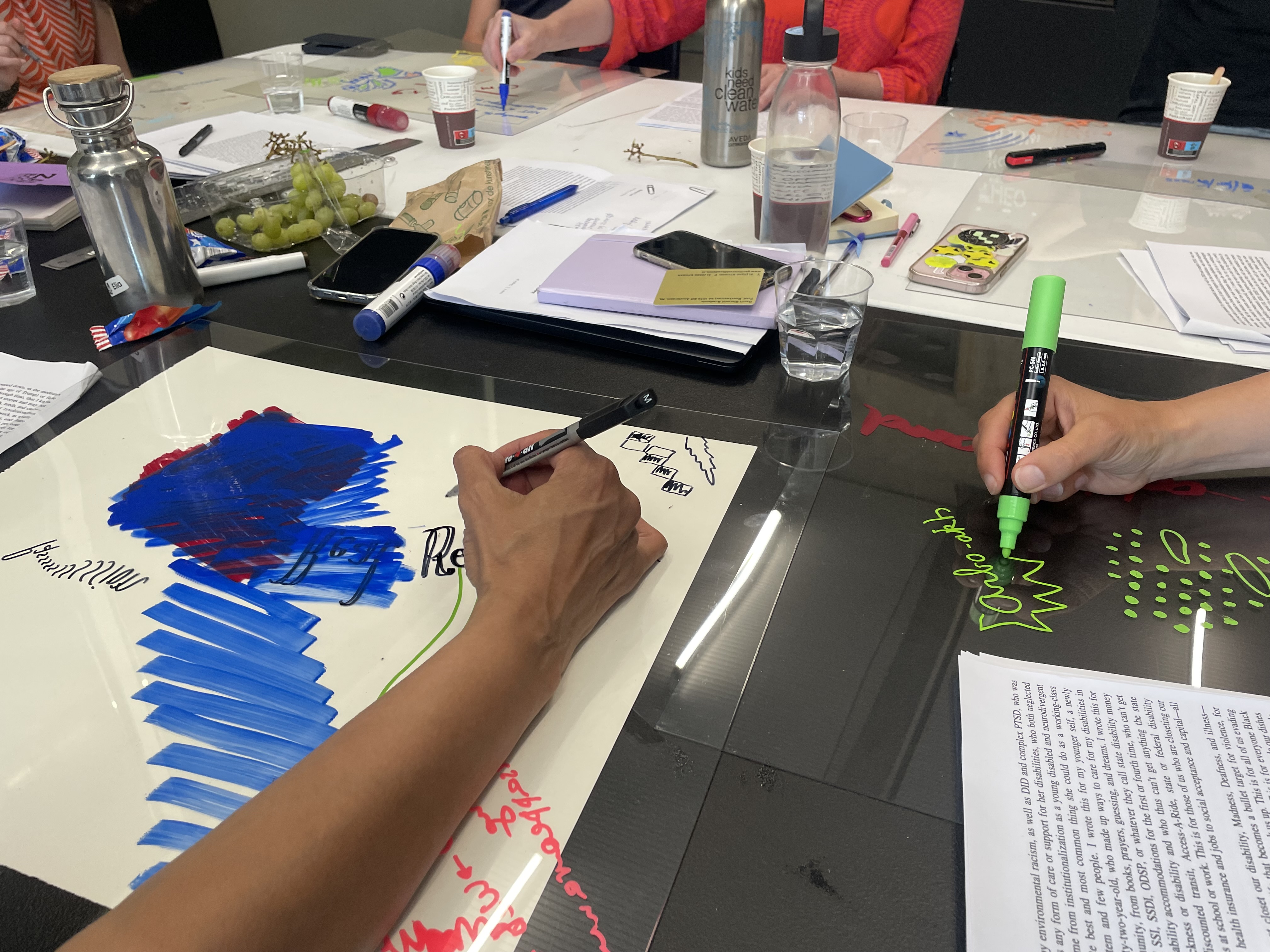
Following the presentation, the participants were invited to read out loud in turns fragments from Leah Lakshmi Piepzna-Samarasinha’s collection of essays Care Work: Dreaming Disability Justice. While one person was reading, the others were encouraged to pick up colorful pens and freely draw, annotate, and experiment on plastic sheets provided. This exercise allowed for different free associations and personal reflections to surface. Moving from one person to the next, each sheet became a site for collective making and collaborative inquiry: abstract designs, confessional writings, and keynotes from the text emerged. After this first drawing stage, clay was introduced as a material with which participants also experimented as a form of annotation. By moulding it in various shapes and attaching it to the sheets, the clay added some real weight to Piepzna’s grim depictions of the violence and abandonment experienced by disabled individuals in the face of systemic disregard.
At times, we stopped to reflect on and discuss the fragments read, exploring themes that grappled with the challenges of creating webs of care and collective access for non-normative minds and bodies, and engaged with the gendered, racialised dimension of the disability justice struggle. The participants discussed the historical impact of white-settler colonialism on the disability movement and the reliance on the state that oftentimes does not provide adequate help due to various bureaucratic blind spots.
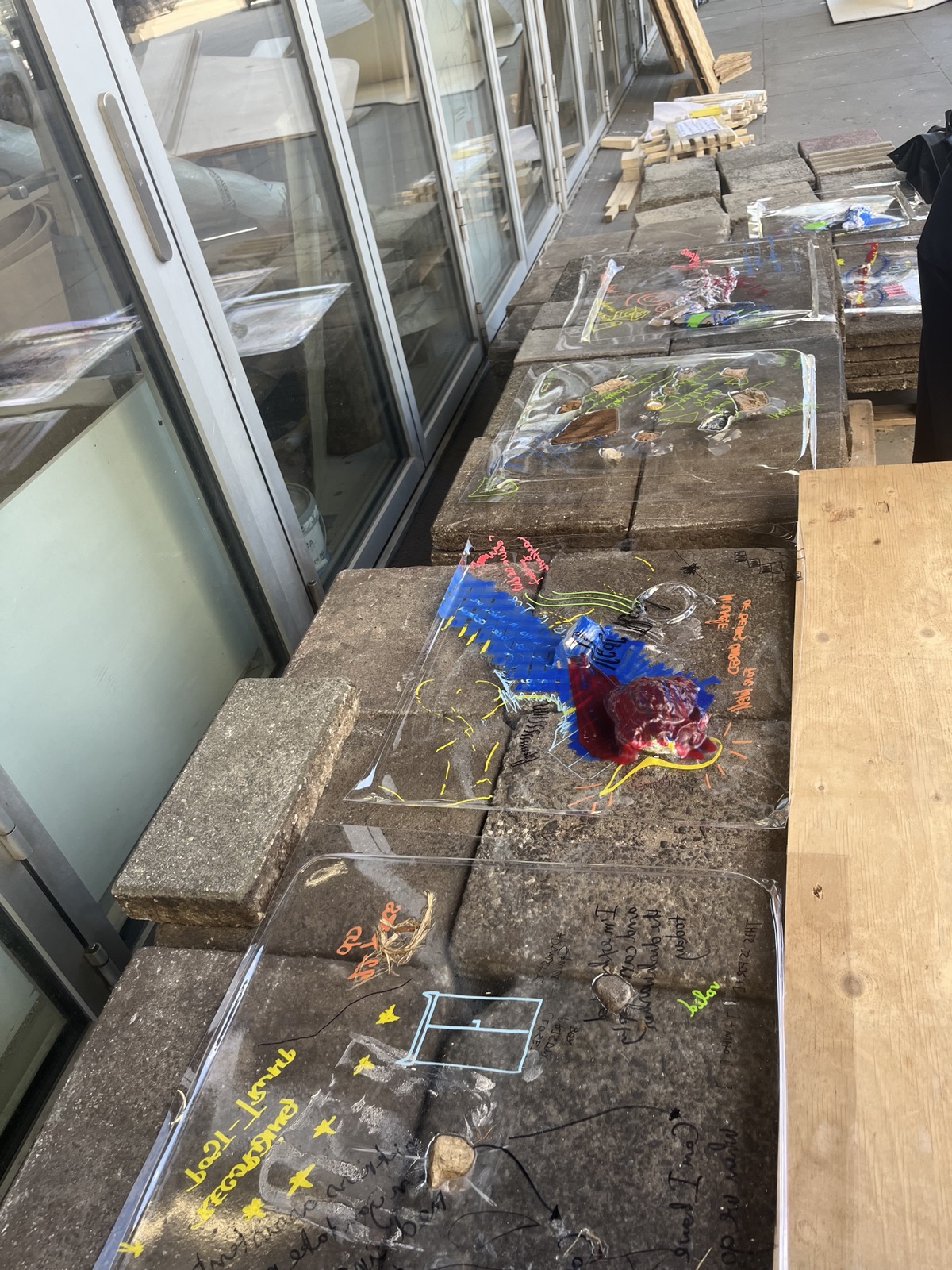
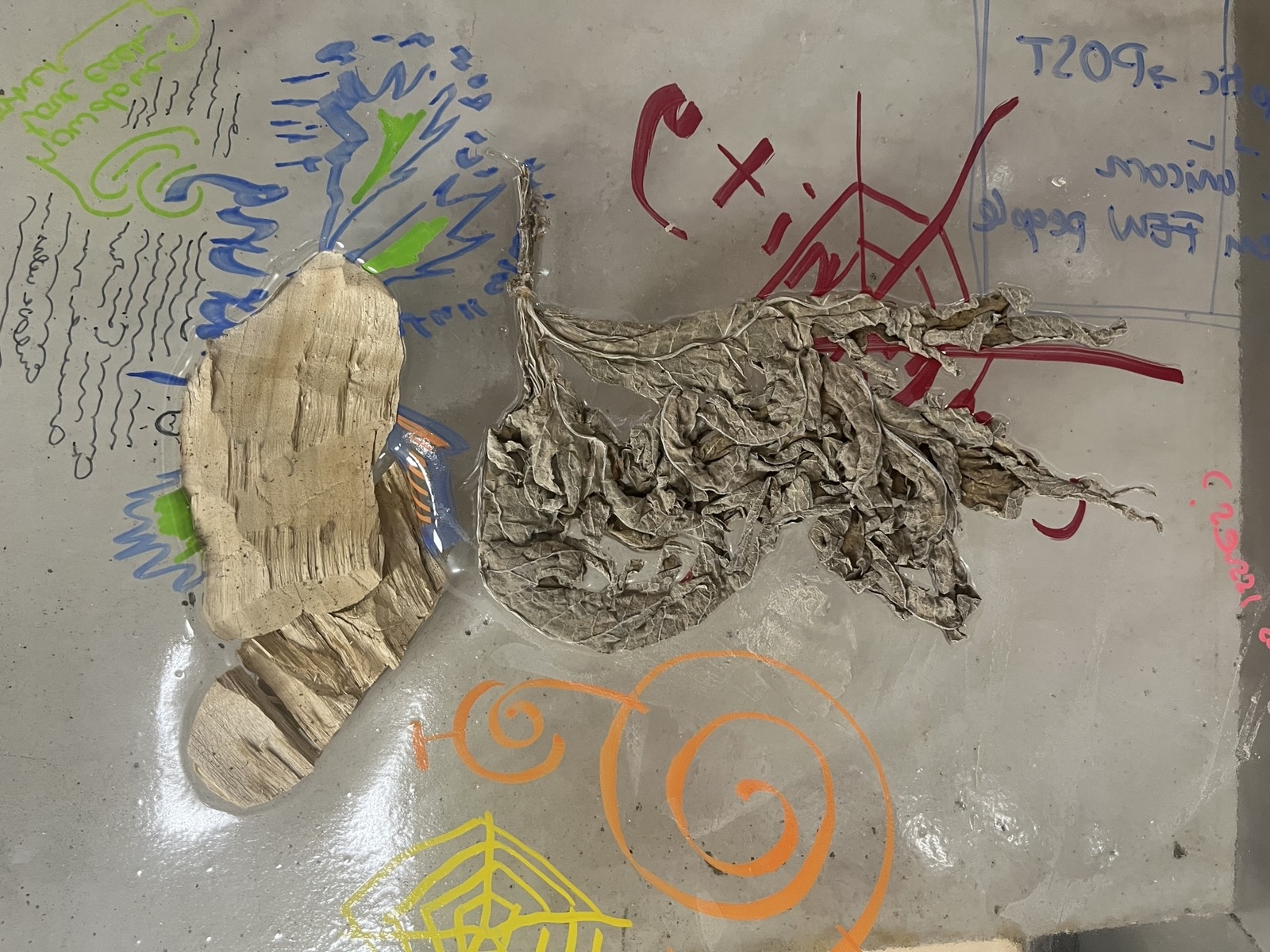
In the final stage of the workshop, participants gathered materials such as rocks and paper and creatively arranged the objects on the previously drawn-on plastic sheets. The final product was then covered in plastic using the vacuum former machine available at the Gerrit Rietveld Academie. Previously used by Pernilla in her own artistic projects, the vacuum former gave the workshop a more hands-on step, and made us reflect on the texture and malleability of different materials.
Moving between discussion and material practice, the session considered how tools, materials, gestures, and group dynamics shape care, and where friction, blind spots, and dependencies emerge within collaborative work and mutual aid networks.
About the series
The Ugly Sides of Care is a long-term artistic research project initiated by the Care Ecologies collective (CE), which aims to address the (mis)conceptions and blind spots of care in facilitating interdisciplinary collaborations within research, arts, design, and education. ARIAS is organising 5 reading sessions of the The Ugly Sides of Care reading group, to provide a discursive bedding and invite a joint thinking around the topic of care-friction, together with peers in facilitation, art, and education. Opening up to the ARIAS network, we invited an artist-researcher from each of our partner organisations to be in dialogue with other research that opens up different perspectives on frictions in care, for example, care-ethics, disability justice, material approaches to care, and webs of care.
Images by: Nienke Scholts & Mara Vasile