



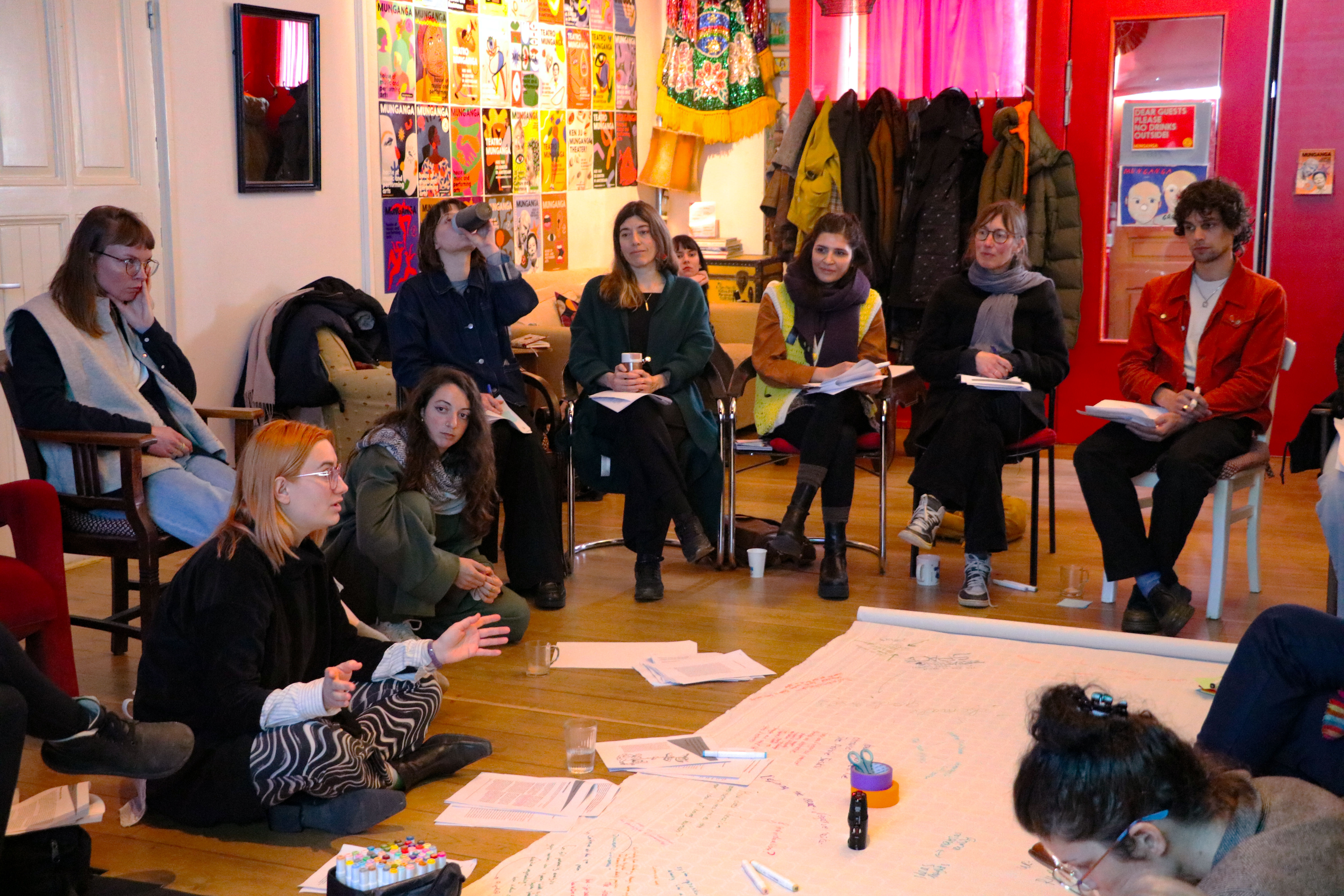
On 2 April, we gathered at Teatro Munganga for the inaugural session of Abolish The Human, our second weaving stories series. For this new series, ARIAS invited the research group Art & Spatial Praxis to unpack their research interests and practice over the course of three events. These sessions center on Sylvia Wynter’s concept of ‘the plot’, viewed simultaneously as a historical material space, a narrative technology, and a transformative practice of being human.
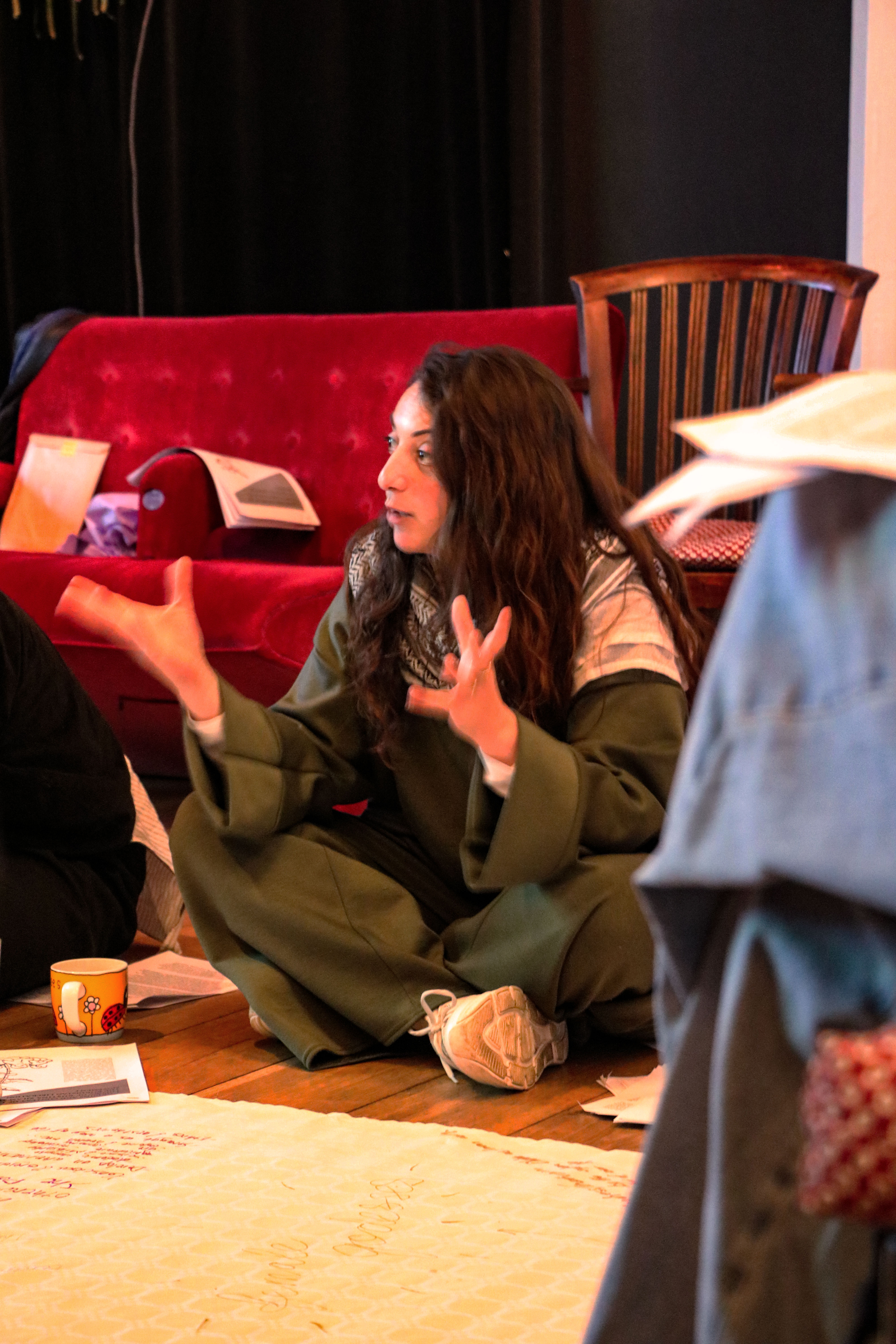
Patricia de Vries, head of the Art & Spatial Praxis research group, opened the session by introducing Wynter’s concept of the plot and its entanglement with plantation logic. She explained that plantation logic had institutionalised rigid dichotomies such as male/female, civilisation/nature, and human/property, which continue to define our modern cities. Within this context, the plot emerged as a subversive space for alternative forms of life and resistance. Patricia then offered a crucial caution: as the plot originates from within the plantation, it remains inextricably bound to it. Therefore, we must avoid romanticising this space. This serves as a vital reminder that resistance is never pure, but is always deeply intertwined with the power structures it seeks to subvert.
Building on this conceptual groundwork, Laura Dubourjal presented Tactics of the Plot (2025). Drawing on Augusto Boal’s Theatre of the Oppressed, the film documents a workshop featuring Radical Roots, a community-based collaborative project in the Netherlands that uses food, storytelling, and publishing as a means of providing radical care. The film shows how the collective must navigate the complexities of institutional funding, and what tactics they have developed in response.
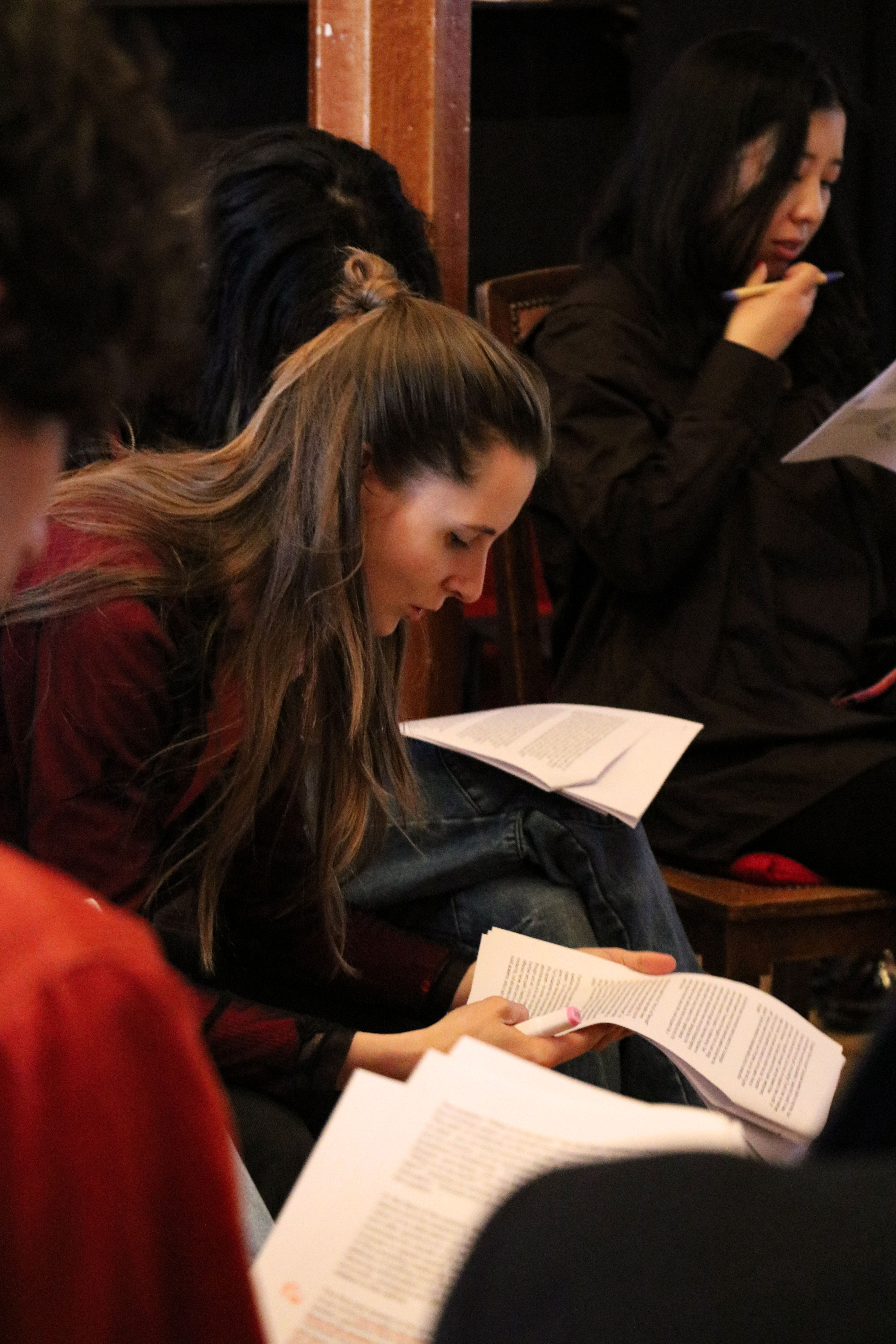
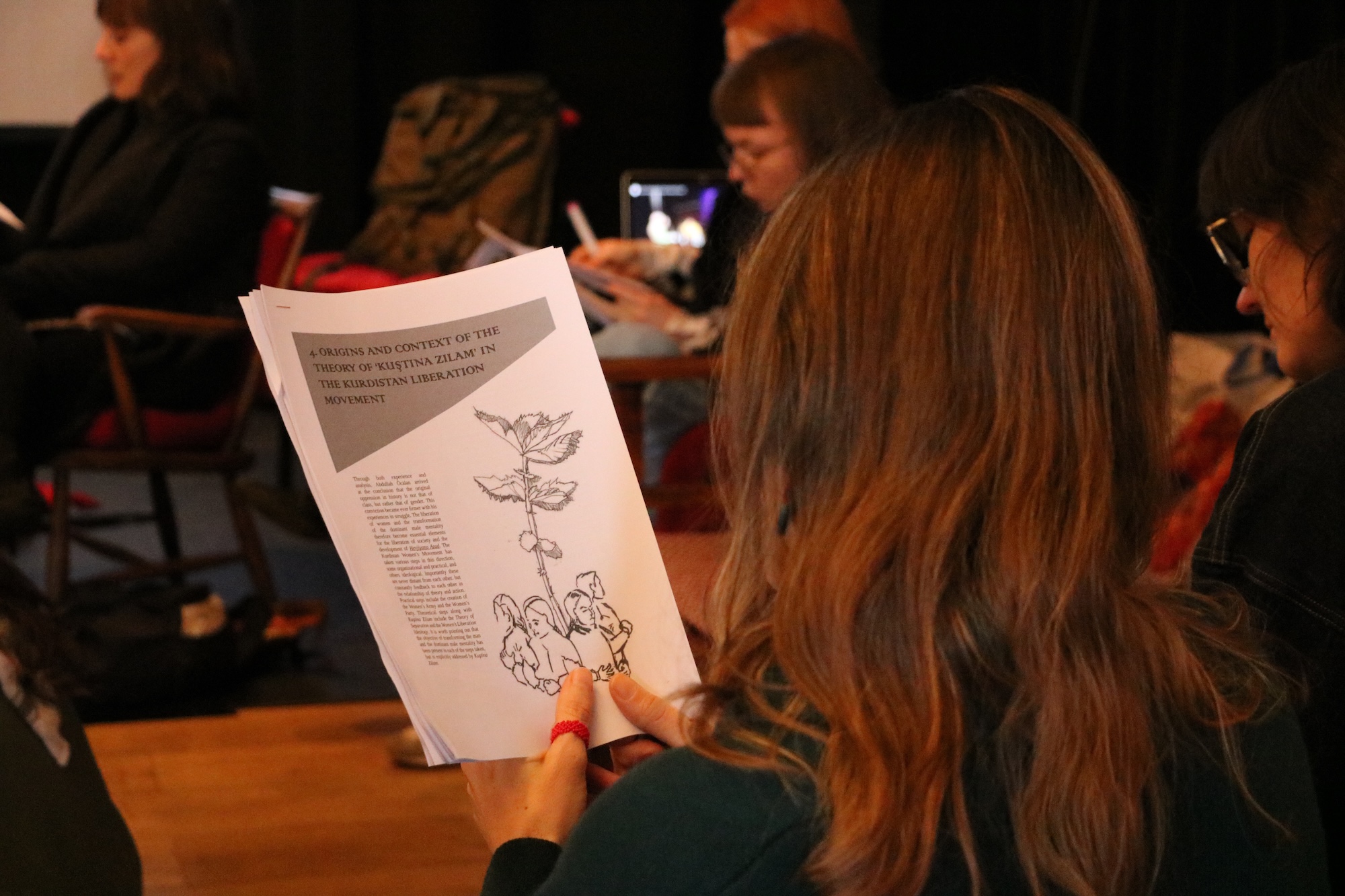
This led us to transition into a reading circle led by Iliada Charalambous, which was focused on women's liberation and the Kurdish Women's Freedom Movement's concept of the 'free personality'. The group engaged with three core texts:
- “How to live, what to do, where to start?” (Extract from Abdullah Öcalan’s 4th Manifesto)
In this text, Abdullah Öcalan, leader of the Kurdistan Workers' Party (PKK), critiques capitalist modernity, arguing that its pillars of industrialism, nationalism, and positivism suppress social identity. To counter this, Öcalan proposes the concept of democratic modernity, which requires a radical break from standard social norms.
- Origins and Context of the Theory of ‘Kuçtina Zilam’ in the Kurdistan Liberation Movement
Rather than class, patriarchy is the foundational form of oppression. Therefore, liberating society requires transforming the dominant male mentality and redefining ethics and aesthetics through a revolutionary lens.
- Jineolojî as the Science of Woman
As women are considered the world's oldest colonised group, their liberation is crucial for addressing broader social issues and overcoming the limitations of capitalist modernity. Jineolojî, or ‘science of woman’, emerges as a philosophy focused on woman-centred knowledge to challenge patriarchal, capitalist, and colonial systems.
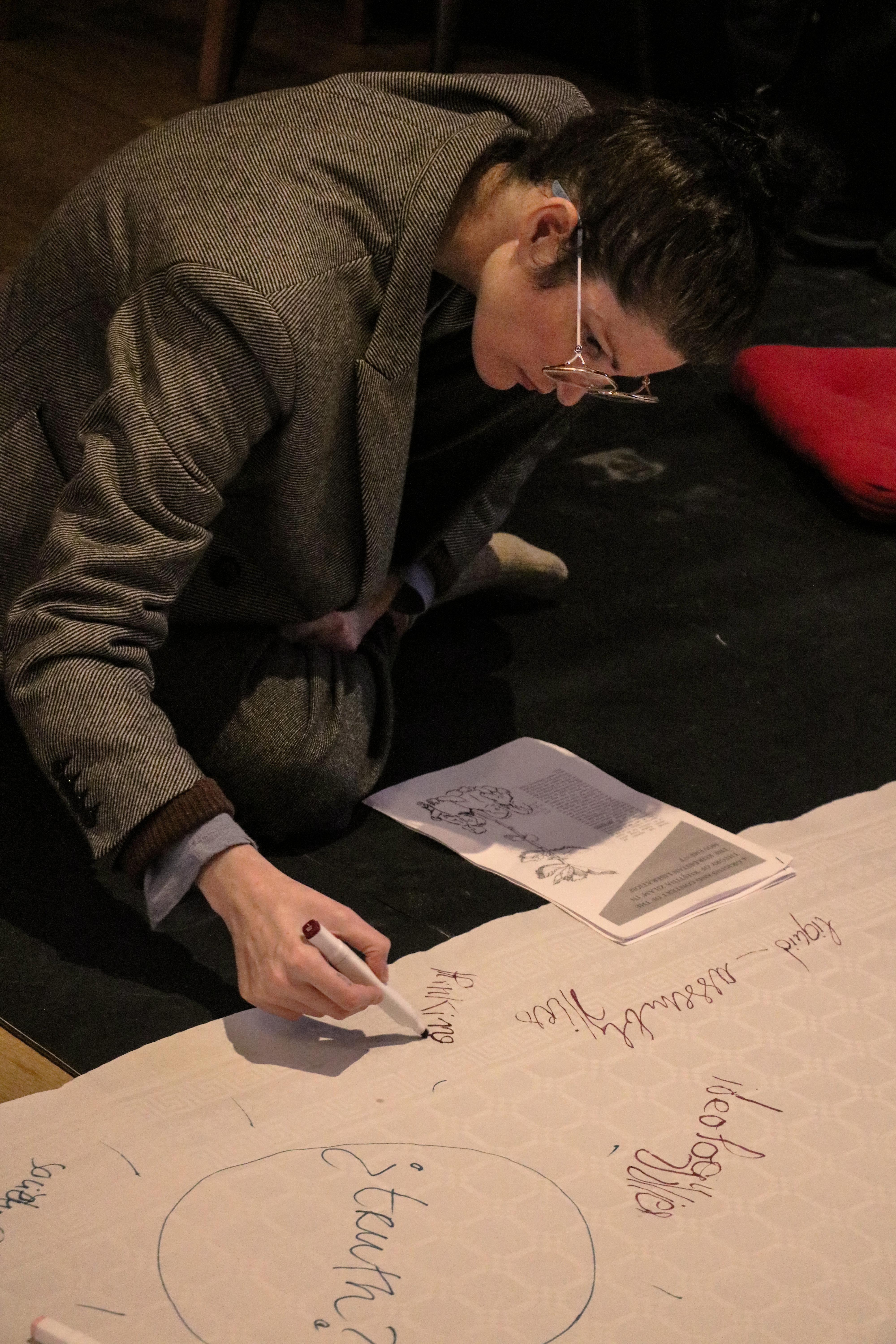
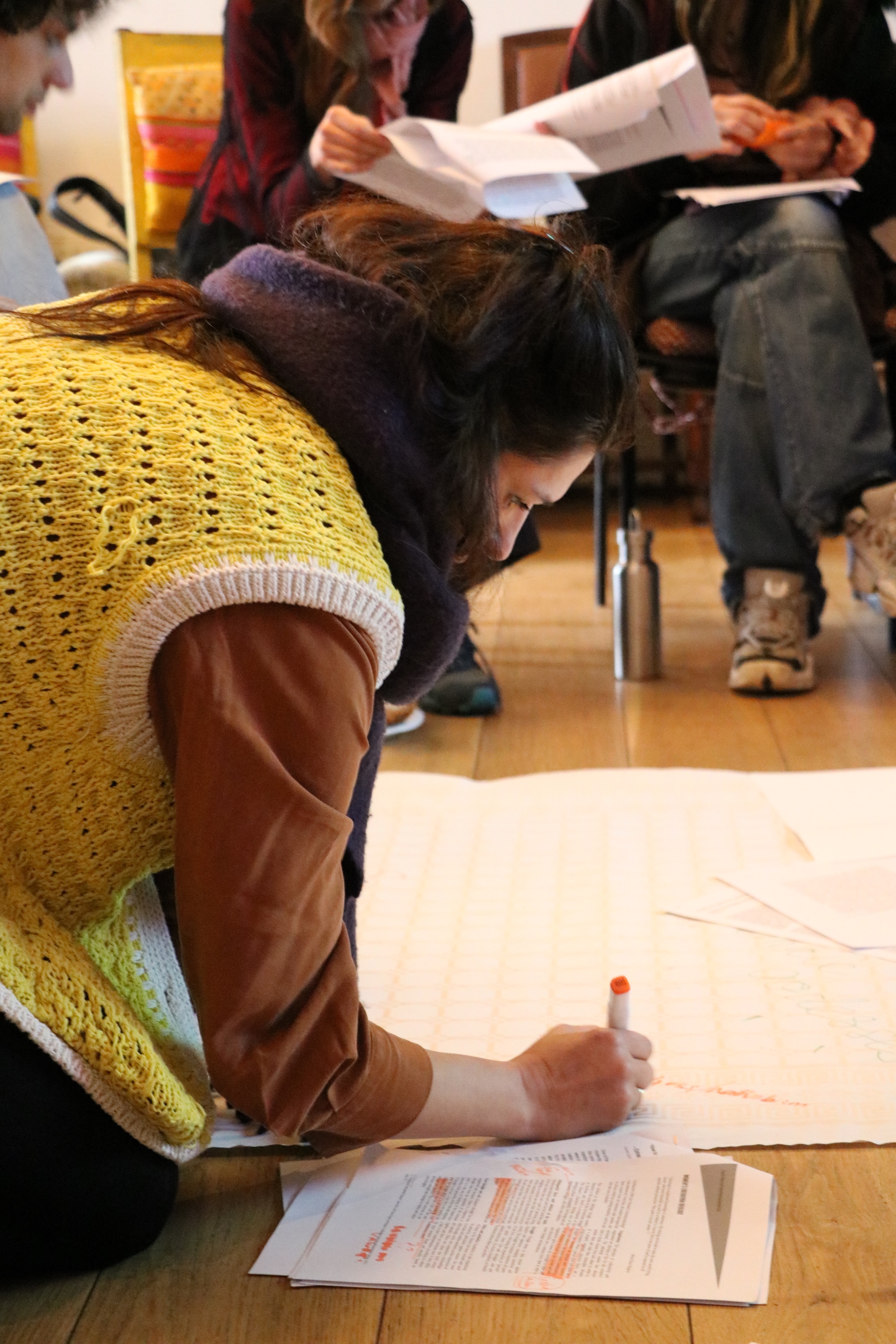
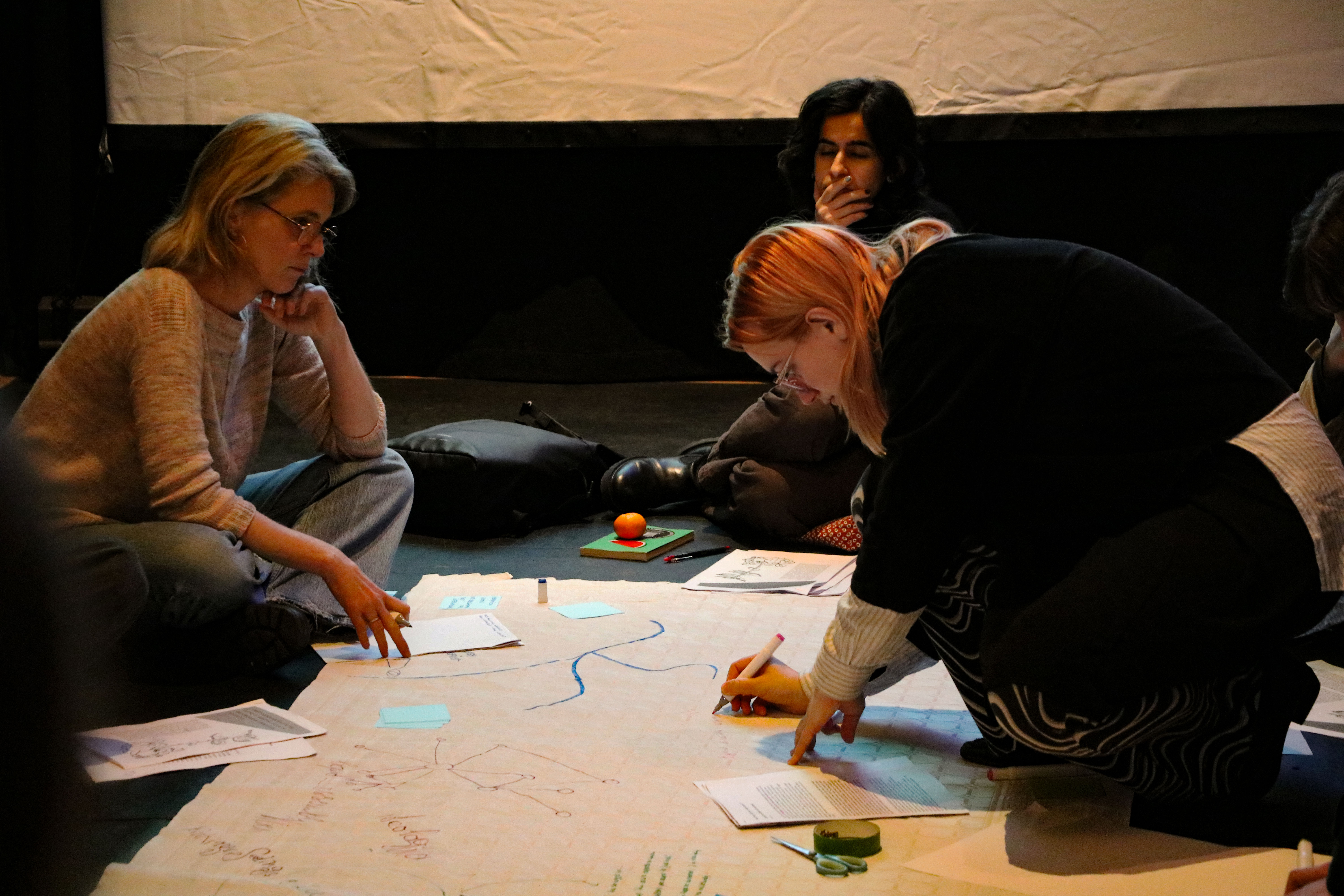
Gathered around a large scroll of paper, participants collectively annotated the texts, deconstructing the figure of ‘the man’ and, importantly, brainstorming how we might organise and live otherwise.
About
weaving stories is a series organised by ARIAS and curated by Nienke Scholts. It invites artist-researchers or research collectives to explore and interrogate a specific research theme across multiple sessions with participants. In a context where opportunities for slow, in-depth exchange are increasingly limited, weaving stories provides space to gather around diverse perspectives and approaches to doing research.
Art & Spatial Praxis at Rietveld Sandberg Research focuses on artistic and academic interventions in spatial, institutional, and digital enclosures. Headed by Patricia de Vries and coordinated by Laura Dubourjal, the research group explores the practices of makers and thinkers whose work resonates with Sylvia Wynter’s concept of the plot. It approaches the plot as a methodological framework, asking how artists, activists, and scholars can challenge institutional and capitalist norms to cultivate alternative forms of understanding, being, and social relations.
Iliada Charalambous is a Cypriot visual artist whose practice centres on assembling and collective political education. Through her work, she collaborates with diverse communities to reflect on the commons, explore methods and tools for collective organising, and imagine potential forms of resistance. She is currently developing the program Assembling in Resistance at BAK (Basis voor Actuele Kunst), which is structured around the assembly artwork What Are Your Flowers? She collaborated with Serda Demir on the series True Counterpower at the Van Abbemuseum and leads the political education program Reading Counterpower at Gemaal op Zuid, Rotterdam. She has completed the BAK Fellowship for Situated Practice (2023–24).