
weaving stories, series II: Abolish the Human #2
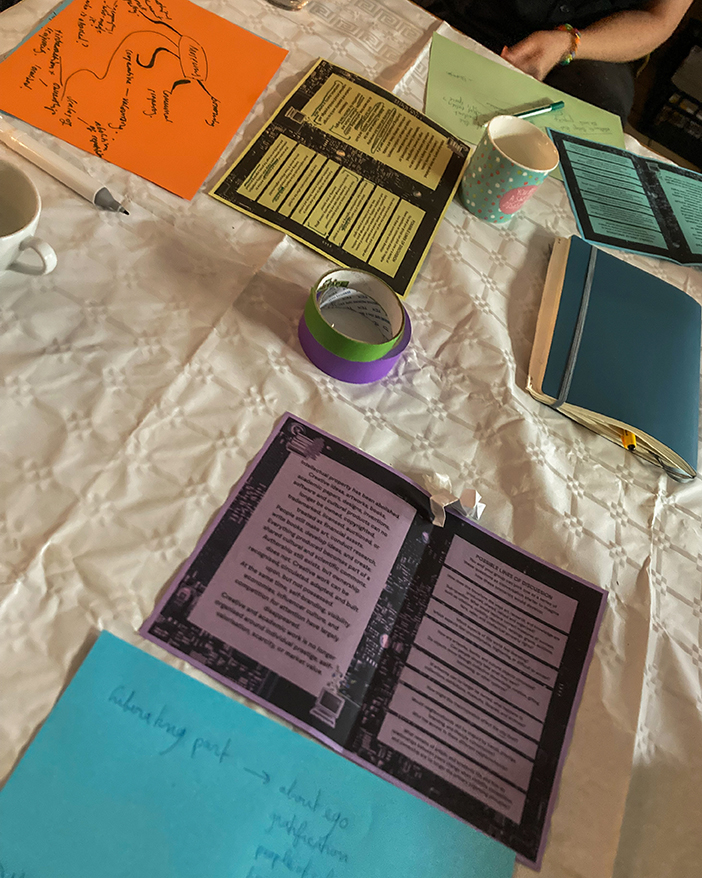
One day, rent, mortgages and homeownership are abolished. Imagine the city's visual landscape: what visible changes will we see over time? What elements might fade away, and which new features could appear? Think about fences, gates, surveillance, private security, police, parks, commercial streets, family homes, and public spaces.
- Prompt from one of the scenarios proposed to the participants
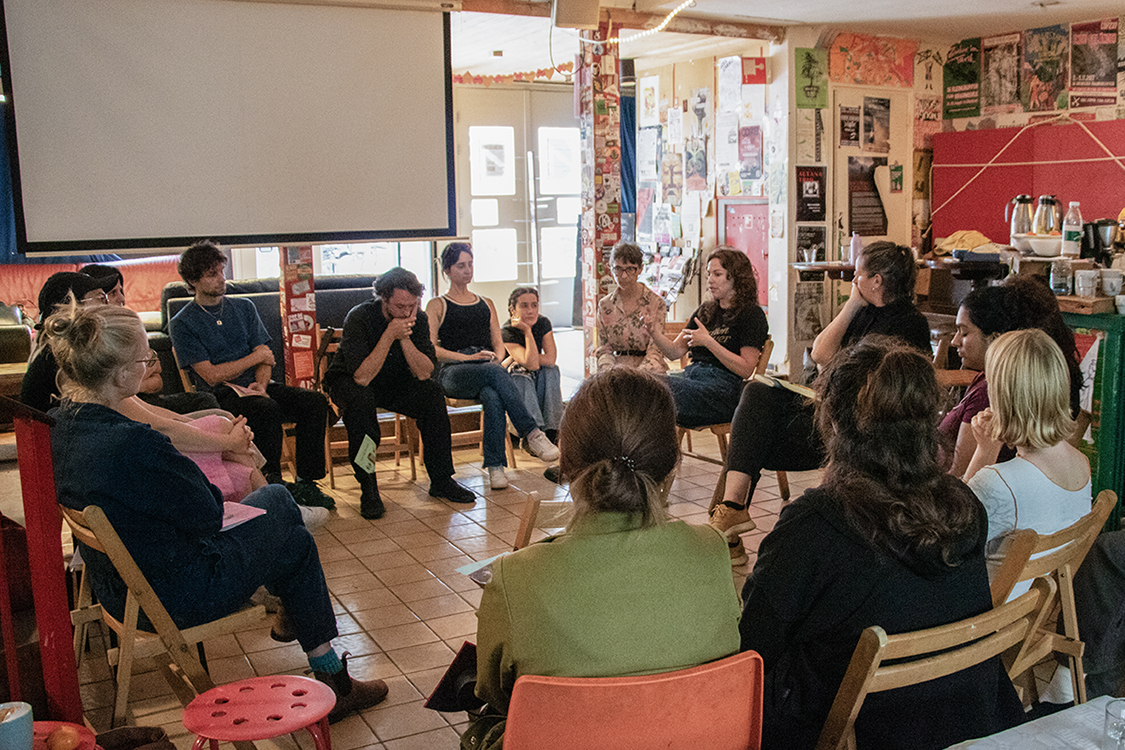
On 15 September, we came together at NieuwLand for the second session of Abolish The Human, the second iteration of our weaving stories series. For this series, the Art & Spatial Praxis research group turned to Sylvia Wynter’s concept of “the plot”, understood at once as a historical material space of resistance, a narrative technology, and a transformative practice of being human.
Patricia de Vries, head of the research group, opened the gathering by introducing us to “the plot” and its deep entanglement with plantation logic. It was on the plantation that land and people were first reduced to mere units of exchange value and labor, and its logic provided the foundational spatial and economic blueprint for urban centres. Through urban planning based on exclusionary mechanisms of segregation and control, cities dictate which ways of life are valued and which are cast as deviant, and thus neglected or policed. To stop reproducing this same logic, Patricia insisted that private property, itself grounded in exclusion, must be challenged. By foregrounding use value, care, and collectivity, the plot emerges within the city as a site of resistance, where other forms of sociality and relation become possible. Taking NieuwLand* the venue that hosted the session, as an example of a plot, Patricia closed her introduction by inviting participants to plot together and imagine a city without property.
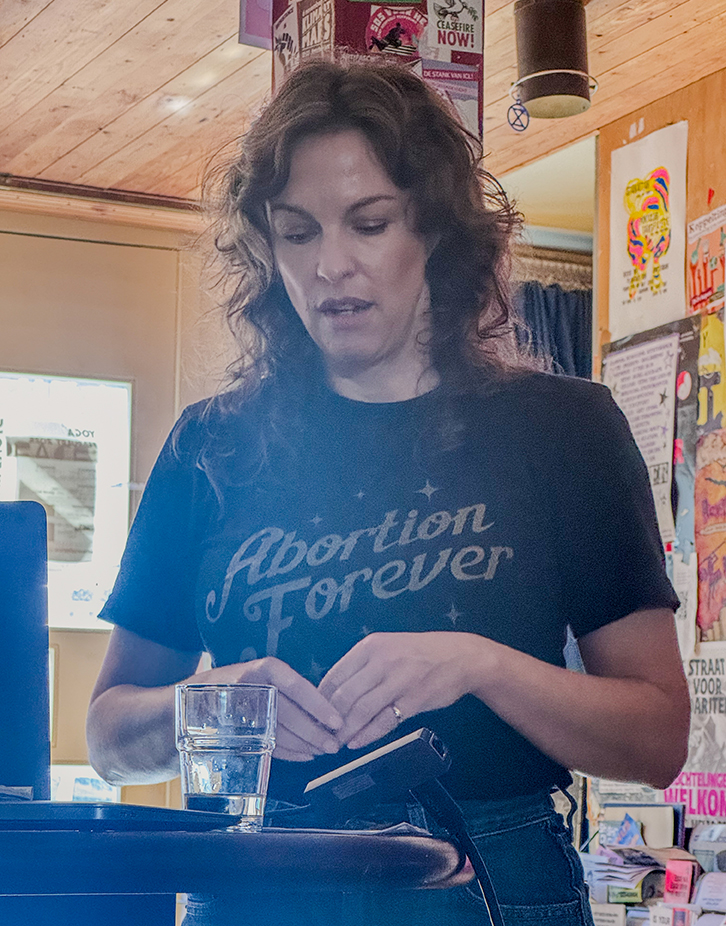
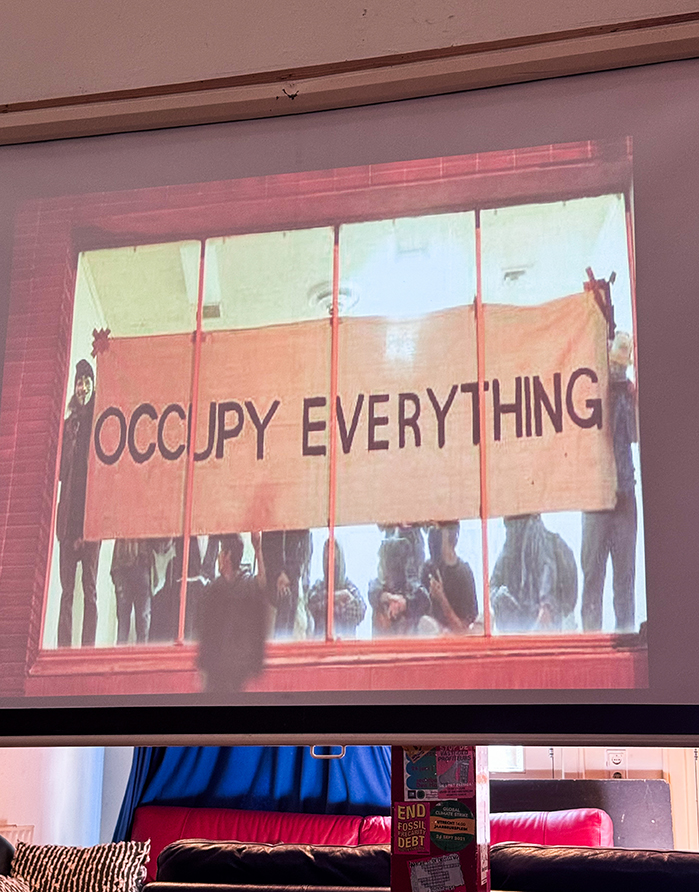
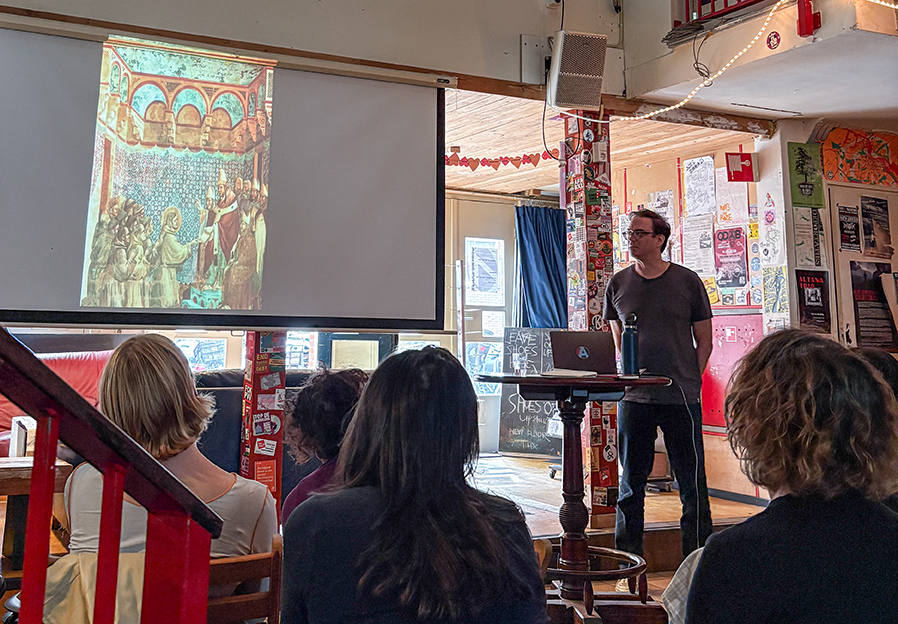
The session continued with a lecture by philosopher Daniel Loick, whose work examines the historical and political foundations of property while exploring abolitionist approaches to ownership. Challenging the assumption that property is a natural or necessary basis for organising society, he argued that the very concept of appropriation, and the relations it makes possible, is, in fact, abusive. Inequality, ecological destruction, dispossession, and the devaluation of the self are therefore intrinsic and necessary aspects of it, rather than an undesired byproduct. Daniel presented the figure of the squatter who, by confronting the order and making social resources available again for use, establishes different relations of labour and care. In conclusion, he invited us to consider the possibility of universalising the figure of the squatter and applying it to other fields.
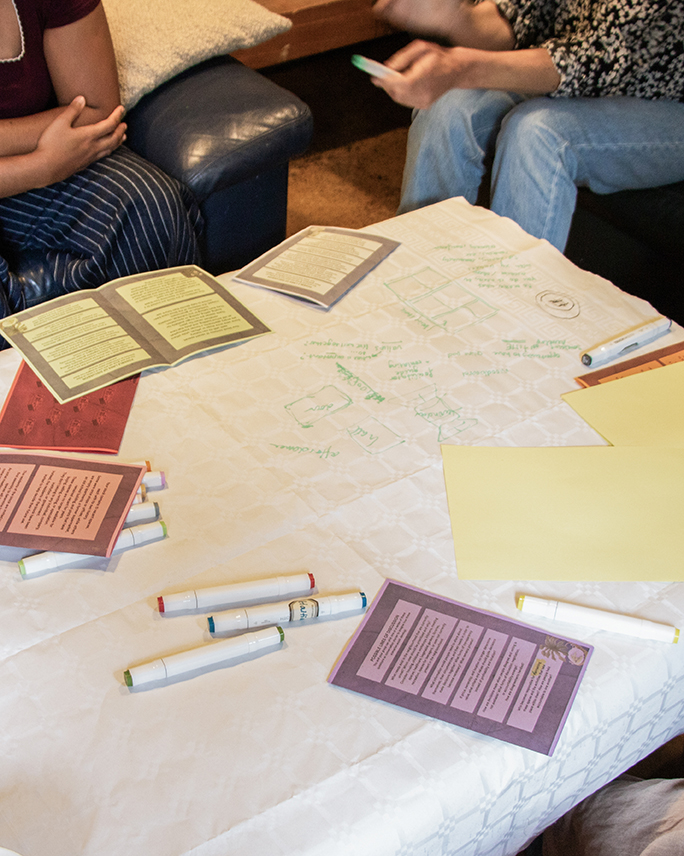
Following Daniel’s lecture, participants were divided into small working groups, each given a different scenario as a starting point for imagining a city without property. Guided by prompts and possible lines of discussion offered by Laura Dubourjal, the groups brainstormed and annotated ideas, challenges, and points of reflection. We then gathered together again to share our insights.
*NieuwLand is a community project combining a living collective, workplaces and a social-political neighbourhood centre in Dapperbuurt, Amsterdam-Oost. They host non-commercial, volunteer-run activities based on solidarity and self-organisation.
About the series
weaving stories is a series organised by ARIAS and curated by Nienke Scholts. It invites artist-researchers or research collectives to explore and interrogate a specific research theme across multiple sessions with participants. In a context where opportunities for slow, in-depth exchange are increasingly limited, weaving stories provides space to gather around diverse perspectives and approaches to doing research.
Art & Spatial Praxis at Rietveld Sandberg Research focuses on artistic and academic interventions in spatial, institutional, and digital enclosures. Headed by Patricia de Vries and coordinated by Laura Dubourjal, the research group explores the practices of makers and thinkers whose work resonates with Sylvia Wynter’s concept of the plot. It approaches the plot as a methodological framework, asking how artists, activists, and scholars can challenge institutional and capitalist norms to cultivate alternative forms of understanding, being, and social relations.
Daniel Loick is a philosopher and political theorist whose work focuses on critical social theory, political philosophy, and abolitionist thought. His research examines property, law, and institutions, asking how social life might be organised beyond domination, exclusion, and ownership. His recent work explores alternatives to property-based social relations and the possibilities of collective forms of care and responsibility