



The Ugly Sides of Care Reading Group series is hosted by the Care Ecologies Collective as part of a larger joint research project aimed at addressing the (mis)conceptions and blind spots of care in facilitating interdisciplinary collaborations within research and the arts.
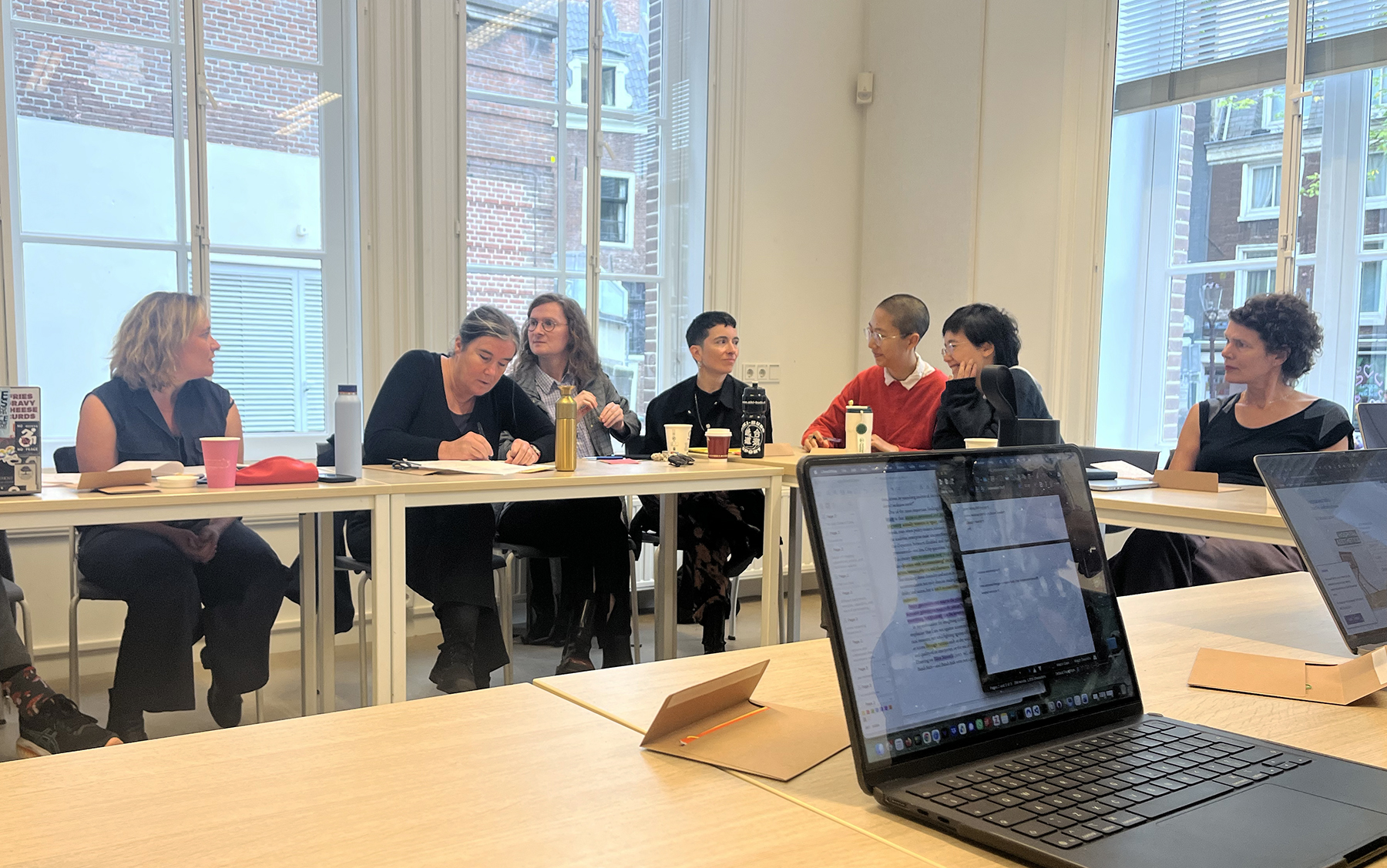
This second gathering, led by assistant professor in Critical Disabilities Studies, Leni van Goidsenhoven, took place at a room at the UvA where we had just enough chairs to huddle together with an interdisciplinary group of artists, activists, and researchers. They all came together to discuss both their personal and professional questions around care, access, and intimacy.
As our sessions are designed to share research practice with peers, Leni decided to discuss a still unpublished article she was working on. In it, she draws on Lauren Berlant, Aimi Hamraie, Margaret Price and Mia Mingus to point out the gap between accessibility as a lived and negotiated praxis, and the ways it is commonly institutionalised. During the session, a small reader containing fragments from different authors was distributed to help deepen and enrich our discussion. Prompts in the form of small cards with questions, helped to reflect on moments of friction, awkwardness, and intimacy. For example, moments in which accessibility was supposedly present but did not feel accessible in practice; moments in which unevenness or difficulty emerged; or moments in which access unfolded more intuitively and effortlessly.
An in-depth dialogue unfolded as we read several excerpts together, and drew on our own experiences and (artistic) practices. Central to the discussion were the different modes through which access needs could be accommodated. One common approach to accessibility within institutions is through protocols, accommodations, and checklists increasingly shaped by institutional and European policy frameworks on inclusion and universal design. Although the accommodation of access needs that can be provided in this way are important - think about a wheelchair friendly architecture, sign language interpreter, sensory spaces and so on -, disabled people remain excluded in many other ways that are often ‘invisible’. Organisers and curators in the group said they might sense these needs but often feel awkward or incapable to respond to them.
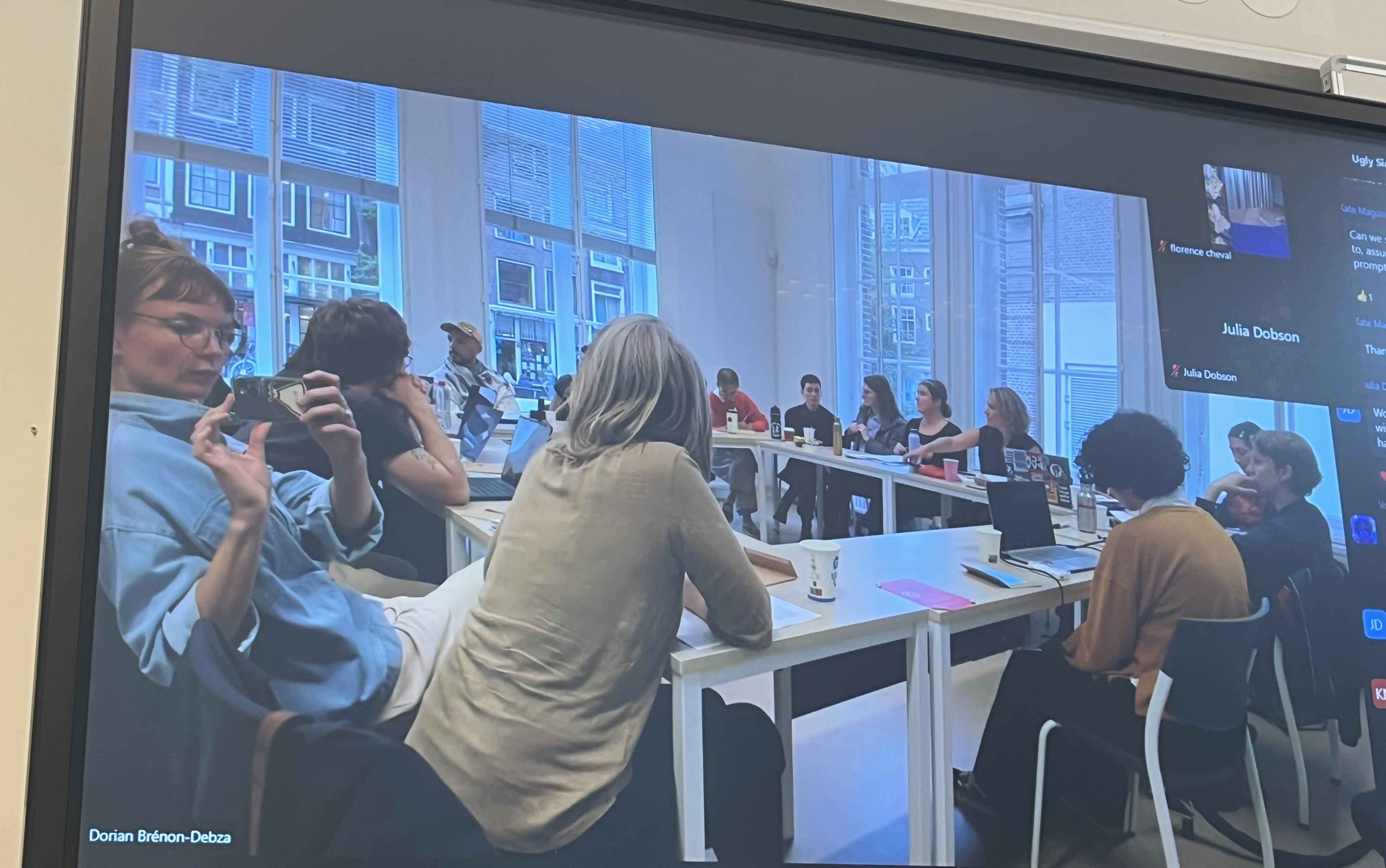
Leni explained how most access needs arise in the moment itself and, therefore, we require care practices that can respond to what emerges in relational and intimate ways. Accessibility, too, emerges through dependency, discomfort, adjustment, and incomplete ways of living and working together.
‘Access intimacy’, a concept coined by disability justice activist Mia Mingus, describes the “elusive, hard to describe feeling when someone else gets your access needs." Engaging with access needs in an intimate way doesn’t mean it has to be easy or organic. It means staying with the awkwardness of not knowing how to respond but to try anyway. In an anecdote someone shared, one person asked him in the supermarket to reach for a box of cereal. As he isn’t tall enough either, a third person tried to grab it but failed as well. In the end, they share the intimacy of recognising each other's needs, even though those needs were not fulfilled.
So, how to conceive accessibility and access intimacy as unstable and negotiated processes that need to be reconsidered anew in every situation, instead of fixing them into rigid one-size-fits-all solutions? We concluded the session feeling encouraged by each other to explore these ideas further in practice and to lean into awkward moments when they arise. And, above all, to try to truly meet each other as equal beings.
About the series
The Ugly Sides of Care is a long-term artistic research project initiated by the Care Ecologies collective (CE), which aims to address the (mis)conceptions and blind spots of care in facilitating interdisciplinary collaborations within research, arts, design, and education. ARIAS is organising 5 reading sessions of the The Ugly Sides of Care reading group, to provide a discursive bedding and invite a joint thinking around the topic of care-friction, together with peers in facilitation, art, and education. Opening up to the ARIAS network, we invited an artist-researcher from each of our partner organisations to be in dialogue with other research that opens up different perspectives on frictions in care, for example, care-ethics, disability justice, material approaches to care, and webs of care.
Leni Van Goidsenhoven is Assistant Professor in Critical Disability Studies at the University of Amsterdam. Her current research sits at the intersection of disability heritage, accessibility aesthetics, critical neurodiversity studies, and the medical humanities. Drawing on literary and cultural analysis, crip theory, and participatory methodologies, she examines how disability is mediated, remembered, and made meaningful through artistic, archival, and heritage practices.
Identifying as a white disabled/neurodivergent scholar, Leni’s work has developed from earlier research on autism, voice, and narrative towards an exploration of access aesthetics: artistic and social practices that understand access not as accommodation or inclusion alone, but as a creative and political force. Across performance, exhibition-making, and literature, she is interested in how access can generate new forms of intimacy and collective world-making.
Van Goidsenhoven is particularly known for OnGehoord, an award-winning participatory project developed with minimal-verbal young adults. Combining artistic practice, research, and community engagement, the project resulted in a book, exhibition, film, residency, and workshops for healthcare professionals, and received the 2021 Science Communication Award of the Royal Flemish Academy of Belgium. Throughout her career, she has worked closely with artists, performers, and cultural institutions, including collaborations with Sonja Jokiniemi and Iris Bouche, NTGent, STUK, and Museum Dr. Guislain.
Images by: Nienke Scholts